Most homeowners do not think about their backflow preventer until something goes wrong.
That makes sense. It is not a fixture you use every day like a faucet, toilet, shower, or water heater. It usually sits outside near an irrigation system, by a water meter, or in a mechanical area where it is easy to overlook.
But when a backflow preventer starts leaking, rusting, failing a test, or causing pressure problems, it should not be ignored.
A backflow preventer helps keep dirty or non-drinkable water from flowing backward into your clean water supply. If pressure changes inside the plumbing system, a failing device may allow water to move the wrong way.
At Piedmont HVAC, Plumbing and Chimney, we help homeowners catch these problems early. If you notice leaks, pressure changes, strange water, visible corrosion, or a failed backflow test, your backflow preventer may need repair.
What Is a Backflow Preventer?
A backflow preventer is a plumbing safety device that helps stop dirty or non-drinkable water from flowing backward into your clean water supply. It allows water to move in the right direction, then helps block reverse flow when pressure changes happen.
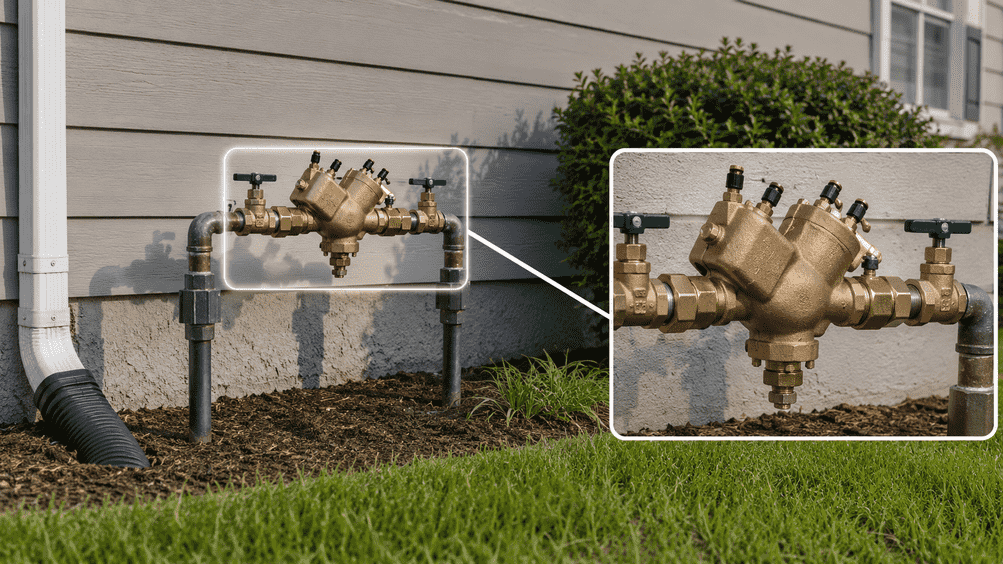
This matters because irrigation lines, garden hoses, outdoor faucets, boilers, and other water-connected equipment can contain water that is not safe to drink. If that water moves backward into clean water lines, it is called backflow. A working backflow preventer helps protect your home’s water quality and plumbing system.
What Causes Backflow?
Backflow is caused by a pressure change that makes water move in the wrong direction through the plumbing system. The two main causes are backsiphonage and backpressure.
- Backsiphonage: This happens when water pressure suddenly drops and creates suction. That suction can pull dirty or non-drinkable water backward into the clean water line. A common example is a garden hose sitting in dirty water when the water pressure drops.
- Backpressure: This happens when pressure from another system becomes stronger than the clean water supply. Instead of being pulled backward, unwanted water is pushed backward. This can happen with irrigation systems, boilers, pumps, pressure tanks, or other pressurized plumbing equipment.
In simple terms, backsiphonage pulls water backward, and backpressure pushes water backward. A working backflow preventer helps stop both from contaminating the clean water supply.
Why Backflow Preventer Repair Matters
A backflow preventer protects your clean water supply by stopping dirty or non-drinkable water from moving backward through the plumbing system. If the device is leaking, corroded, damaged, or failing a test, it may not protect your water the way it should.
Some backflow preventer problems can be repaired with cleaning, new seals, or replacement parts. Others may require full replacement. The key is to have the device checked before a small issue turns into a failed inspection, water pressure problem, or larger plumbing concern.
Sign 1: Your Backflow Preventer Is Leaking
A leaking backflow preventer is one of the most common signs it may need repair. You may notice water dripping, spraying, or pooling around the device. The leak may come from a relief valve, shutoff valve, test port, cracked fitting, loose connection, or worn internal seal.
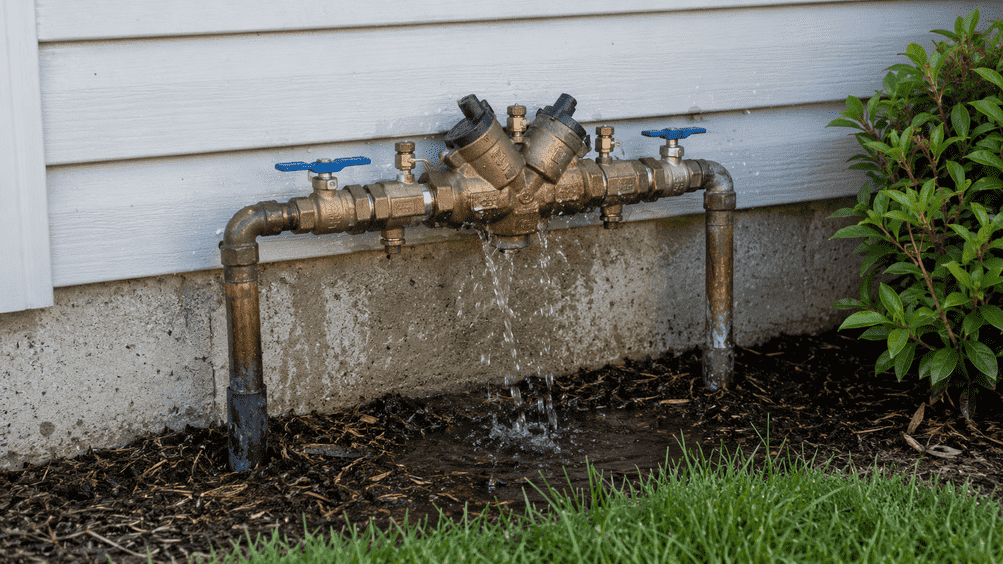
Common causes of backflow preventer leaks include:
- Worn seals or gaskets
- Debris stuck inside the valve
- Corrosion
- Pressure changes
- Freeze damage
- Cracked or loose fittings
A small release of water can happen with some devices during pressure changes, but steady leaking is not normal. If the leak does not stop, the backflow preventer may be damaged or no longer sealing correctly.
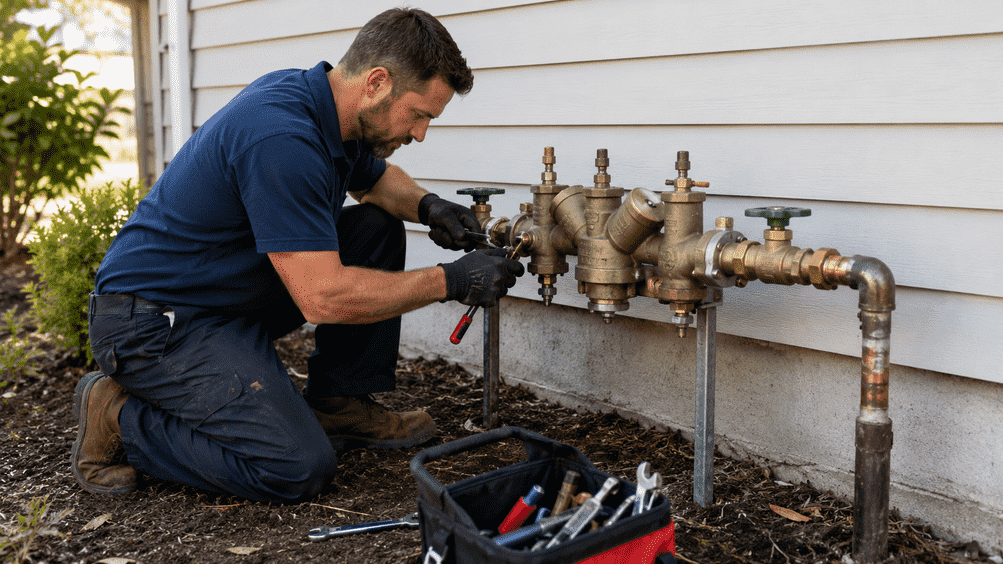
If your backflow preventer is leaking, do not take it apart yourself. A plumbing professional can inspect the device and determine whether it needs cleaning, repair parts, a rebuild kit, or full replacement.
Sign 2: Your Water Pressure Suddenly Changes
A failing backflow preventer can restrict water flow and cause sudden pressure problems. You may notice weak sprinkler zones, low pressure from outdoor faucets, pressure that drops when the irrigation system starts, or water flow that begins strong and then weakens.
This can happen when internal parts inside the backflow preventer become clogged, stuck, damaged, or worn. If the check valves do not open correctly, water cannot move through the device the way it should.
Pressure issues can also come from clogged pipes, partially closed valves, pressure regulator problems, or water supply work. But if the problem started after irrigation use, seasonal startup, outdoor plumbing work, or a recent repair, the backflow preventer should be checked.
Pay attention to when the pressure change happens. That detail can help a plumber find the cause faster.
Sign 3: Your Water Looks, Smells, or Tastes Strange
Sudden water quality changes should never be ignored. If your water looks cloudy, smells unusual, tastes metallic, or appears brown, yellow, rusty, or dirty, there may be a problem somewhere in the plumbing system.
A failing backflow preventer does not always mean your water has been contaminated. Water quality issues can also come from sediment, old pipes, water heater problems, private well issues, or utility work. Still, because backflow involves water moving in the wrong direction, any sudden change should be taken seriously.
This is especially important if the issue happens after irrigation use, outdoor hose use, plumbing repairs, or a pressure change. Avoid drinking or cooking with the water until the cause is checked.
Sign 4: You See Rust, Corrosion, or Physical Damage
Backflow preventers are often exposed to rain, humidity, soil, sunlight, freezing temperatures, and normal wear. Over time, those conditions can damage the device.
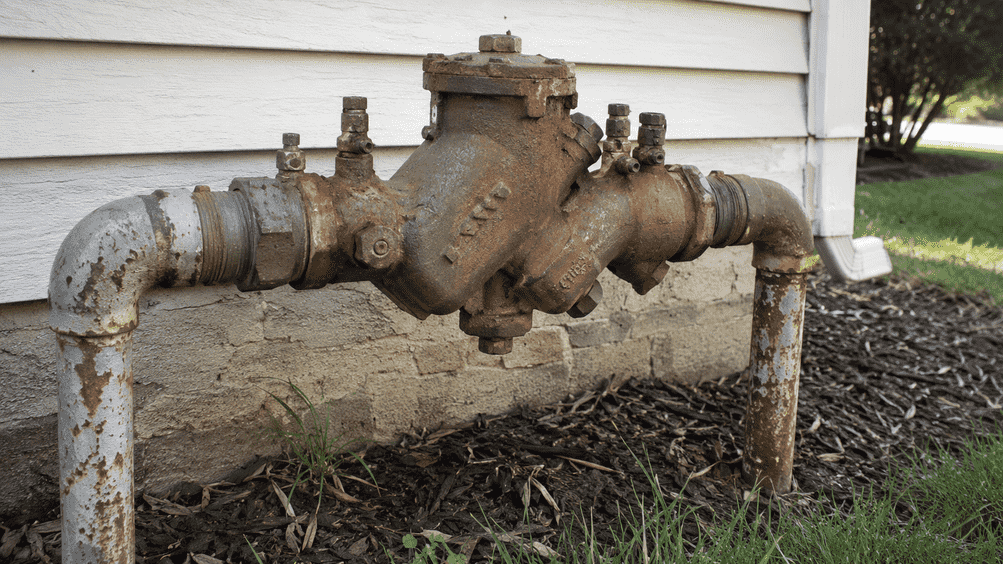
Look for rust, corrosion, cracks, bent valves, missing caps, loose fittings, damaged test ports, broken covers, water stains, or signs of freeze damage. These issues matter because a backflow preventer must seal properly and hold pressure to work correctly.
Freeze damage is especially common on outdoor irrigation backflow preventers. If water freezes inside the assembly, it can expand and crack the device. Many homeowners do not notice the problem until the sprinkler system is turned back on and the unit starts leaking.
If the device is cracked, badly corroded, or visibly damaged, replacement may be safer than repair.
Sign 5: Your Backflow Preventer Fails a Test
A failed backflow test is one of the clearest signs that the device needs repair or replacement. Testing checks whether the backflow preventer can hold pressure and stop reverse water flow the way it should.
A backflow preventer may fail because of worn seals, weak springs, debris inside the valve, damaged check valves, corrosion, freeze damage, improper installation, or age-related wear.
The tricky part is that a failed device may still allow water to flow normally. That does not mean it is protecting the clean water supply correctly.
If your backflow preventer fails a test, schedule repair or replacement promptly. After the issue is fixed, the device may need to be tested again to confirm it is working properly.
What Causes a Backflow Preventer to Fail?
Backflow preventers can fail for several reasons. Some are simple. Others are more serious.
- Debris Inside the Device: Small debris can prevent internal parts from closing all the way. Even a tiny piece of sand, rust, or pipe scale can keep the device from sealing properly.
- Worn Internal Parts: Backflow preventers contain rubber parts, springs, seals, and moving components. Over time, those parts can wear out, crack, or lose flexibility.
- Freezing Weather: Outdoor backflow preventers can crack if they are not properly winterized. Freeze damage often leads to leaks when the system is turned back on.
- Corrosion: Corrosion can weaken metal parts and affect how the device seals and holds pressure.
- Improper Installation: A backflow preventer must be installed correctly for the type of system it protects. If it is installed at the wrong height, direction, or location, it may not perform properly.
- Age: Older devices are more likely to leak, fail testing, or need replacement parts. If a device has been repaired several times, replacement may be the better long-term option.
Can a Backflow Preventer Be Repaired?
Yes, many backflow preventers can be repaired.
A repair may make sense when the device body is still in good condition and the problem is limited to internal parts like seals, springs, gaskets, or check valves.
Repair may be possible if:
- The device is not cracked
- The body is not badly corroded
- Replacement parts are available
- The issue is caused by worn internal components
- The device can pass testing after repair
Replacement may be better if:
- The device is cracked
- It has freeze damage
- It is heavily corroded
- It has failed multiple tests
- It is outdated
- Repairs would cost nearly as much as replacement
A good plumber should explain both options clearly. The goal is not just to stop a leak. The goal is to make sure the device protects your clean water supply.
Why You Should Not Ignore Backflow Preventer Problems
Some plumbing issues can wait a little while. A backflow problem should not.
A failing backflow preventer can lead to:
- Water leaks
- Failed inspections
- Low water pressure
- Poor irrigation performance
- Water quality concerns
- Damage from freezing or corrosion
- Possible contamination risks
Even if the problem seems small, it can get worse over time. A slow drip can become a steady leak. Minor corrosion can turn into a broken fitting. A device that fails testing may not protect your water when pressure changes occur.
Why DIY Repair Is Not Recommended
It may be tempting to fix a leaking backflow preventer yourself, especially if it looks like a simple valve.
But backflow preventers are safety devices. They need to be repaired correctly and may need to be tested after the repair.
DIY mistakes can cause:
- Continued leaking
- Incorrect sealing
- Failed testing
- Pressure problems
- Damage to internal parts
- A false sense of safety
The device may look fine from the outside but still fail to stop reverse flow. That is why professional service is the safer choice.
What to Do If You Think Your Backflow Preventer Is Failing
If you notice a problem, start with a simple visual check.
Look for leaks, rust, cracks, missing caps, pooling water, or signs of damage. Then think about what else has changed. Is your water pressure lower? Does the water look or smell different? Did the issue start after irrigation startup, freezing weather, or plumbing work?
Do not ignore warning signs.
If your water quality has changed suddenly, avoid drinking or cooking with it until the issue is checked. If the device is leaking, turn off the water to that section if you can do so safely, then call a professional.
How Piedmont HVAC, Plumbing and Chimney Can Help
Piedmont HVAC, Plumbing and Chimney provides expert backflow preventer service for homeowners in North Carolina. If your device is leaking, damaged, failing a test, or causing water pressure problems, our team can inspect it and explain the best next step.
We help with backflow preventer repair, replacement, irrigation backflow issues, leaking valves, water pressure concerns, and plumbing safety checks.
If the device can be repaired, we will explain the fix clearly. If replacement is the safer option, we will let you know why. Contact Piedmont HVAC, Plumbing and Chimney today for trusted backflow preventer service in North Carolina.
Final Thoughts
A backflow preventer is easy to overlook, but it plays an important role in keeping your water supply protected. If you notice leaking, pressure changes, strange-looking water, corrosion, visible damage, or a failed test, the device should be checked before the problem gets worse.
Backflow preventer issues can affect water pressure, irrigation performance, plumbing safety, and water quality. Catching the problem early can help prevent bigger repairs and give you confidence that your system is working properly.
If your backflow preventer may need repair, contact Piedmont HVAC, Plumbing and Chimney today. Our North Carolina plumbing team can inspect the device, explain what is wrong, and recommend the right repair or replacement option for your home.
Frequently Asked Questions
A backflow preventer may suddenly leak because of worn seals, trapped debris, pressure changes, corrosion, or freeze damage. If the leak continues after the water pressure stabilizes, the device should be inspected because it may no longer be sealing properly.
If a damaged backflow preventer is not repaired, it may continue leaking, reduce water pressure, fail inspection, or stop protecting the clean water supply correctly. Small problems can also lead to more expensive repairs if corrosion, cracking, or internal valve damage gets worse.
Yes. A backflow preventer can allow normal water flow and still fail to stop reverse flow during a pressure change. That is why leaks, failed testing, corrosion, or strange water quality issues should not be ignored.
A sprinkler backflow preventer may make noise because of pressure changes, trapped air, loose parts, worn internal components, or water hammer. If the sound is new, loud, or happens with weak sprinkler pressure, the device should be checked.
A failing backflow preventer can create a risk of non-drinkable water moving backward into clean water lines. Dirty, discolored, smelly, or unusual-tasting water should be checked right away, especially if it happens after irrigation use or a pressure drop.
If the backflow preventer leaks when the sprinkler system starts, it may have a worn seal, debris in the valve, pressure imbalance, or damage from freezing. Irrigation backflow preventers are exposed to outdoor conditions and often need repair after seasonal startup.
Yes. A leaking backflow preventer can waste water and may increase your water bill if the leak is steady or unnoticed. Wet soil, pooling water, or constant dripping near the device are signs it should be inspected.