Your tap water may look clean, but that does not mean it is free of contaminants. Many common water quality issues are caused by substances you cannot see, including chlorine, hard water minerals, sediment, lead, and PFAS chemicals.
Over time, these contaminants can affect the taste of your water, contribute to plumbing issues, shorten appliance lifespan, and impact overall household comfort. Understanding what may be in your tap water is the first step toward choosing the right testing, filtration, or treatment solution for your home.
At Piedmont HVAC, Plumbing & Chimney, we help homeowners identify water quality concerns and find effective ways to improve their water throughout the home.
What Contaminants Are Commonly Found in Tap Water?
Common contaminants found in tap water include chlorine, sediment, calcium, magnesium, iron, manganese, lead, nitrates, bacteria, and PFAS chemicals. While many public water systems meet regulatory standards, these substances can still affect water taste, odor, plumbing performance, appliance efficiency, and overall water quality. Professional water testing is the most reliable way to determine what contaminants are present in your home’s water supply.

Why Water Quality Matters
The quality of your water affects more than just what you drink. It impacts your plumbing system, water heater, appliances, fixtures, and overall household comfort.
Contaminants and excessive minerals can create a variety of problems. Hard water may leave scale buildup inside pipes and reduce appliance efficiency. Sediment can clog fixtures, while chlorine may affect taste and odor. Some contaminants can also raise health concerns depending on their concentration and long-term exposure.
Even when tap water meets basic drinking standards, many homeowners choose filtration systems to improve taste, protect plumbing, and enhance water quality throughout the home.
Municipal Water vs. Well Water
Your water source often determines the types of contaminants that may be present.
Municipal water is treated before reaching homes and is typically disinfected with chlorine or chloramine. While treatment removes many harmful substances, trace contaminants, minerals, and compounds can still remain.
Private well water is not regulated in the same way. Depending on local conditions, well water may contain sediment, iron, manganese, sulfur, bacteria, nitrates, or other naturally occurring contaminants.
Whether your home uses city water or a private well, professional water testing is the most reliable way to understand what is in your water and whether treatment is recommended.
Chlorine and Chloramine
If your tap water has a chemical taste or smells similar to a swimming pool, chlorine or chloramine may be the reason. Municipal water systems use these disinfectants to kill harmful bacteria and maintain water safety.
While effective, they can affect taste, odor, and even contribute to dry skin and hair for some homeowners. Activated carbon filtration is commonly used to reduce chlorine and improve overall water quality.
Sediment in Tap Water
Sediment includes particles such as sand, dirt, silt, rust, and organic material that can enter water supplies through aging pipes, groundwater sources, or infrastructure issues.
Excess sediment may cause cloudy water, clog fixtures, reduce water pressure, and shorten appliance lifespan. Sediment filters are often installed to improve water clarity and protect plumbing systems.
Hard Water Minerals
Calcium and magnesium are the primary minerals responsible for hard water. Although not typically harmful, they can leave scale buildup on fixtures, create soap scum, reduce appliance efficiency, and contribute to dry skin and hair.
Water softeners are commonly used to reduce hard water problems and help protect plumbing and water-using appliances.
Iron and Manganese
Iron and manganese are naturally occurring minerals often found in well water and groundwater supplies. Elevated levels can cause rust-colored, brown, or black staining on sinks, tubs, toilets, and laundry.
While usually considered aesthetic issues, these minerals can affect water appearance, taste, and plumbing fixtures. Specialized filtration systems are often recommended when iron or manganese levels become excessive.
PFAS ("Forever Chemicals")
PFAS are synthetic chemicals used in products such as nonstick cookware, stain-resistant fabrics, food packaging, and firefighting foam. Because they break down very slowly, they are often called “forever chemicals.”
PFAS cannot be detected by taste, smell, or appearance, making water testing the only reliable way to identify them. Depending on the results, advanced filtration systems such as activated carbon or reverse osmosis may help reduce PFAS levels in drinking water.
Lead and Other Heavy Metals
Older plumbing systems can sometimes introduce lead and other heavy metals into household water supplies. Common concerns include lead, copper, arsenic, chromium, and mercury.
Because these contaminants are typically invisible, professional water testing is often recommended, especially for older homes. Testing can identify potential issues and determine whether filtration is needed.
Nitrates in Well Water
Nitrates are commonly associated with fertilizers, agricultural runoff, septic systems, and groundwater contamination. They are most often a concern for homes that rely on private wells.
Since nitrates are colorless, odorless, and tasteless, testing is the only way to determine if elevated levels are present. Regular well water testing helps homeowners monitor water quality and identify potential concerns early.
Bacteria and Microbial Contamination
Bacterial contamination is one of the most serious water quality concerns, particularly for homes that rely on private wells. Common microbial contaminants include coliform bacteria, E. coli, Giardia, and Cryptosporidium.
Because contaminated water may still appear clear and normal, regular water testing is often recommended to help identify potential issues before they affect your household.
Signs Your Water Should Be Tested
Water testing may be beneficial if you notice:
- Unpleasant tastes or odors
- Cloudy or discolored water
- White mineral buildup on fixtures
- Rust or black staining
- Sediment in drinking water
- Dry skin after bathing
- Frequent plumbing issues
- Changes in water quality over time
Even without obvious symptoms, routine testing can help uncover hidden water quality concerns.
DIY vs. Professional Water Testing
DIY water test kits can provide basic information about water hardness, chlorine levels, pH balance, and certain contaminants. However, they often have limitations.
Professional laboratory testing provides a more complete analysis and can identify contaminants such as PFAS, heavy metals, nitrates, bacteria, and total dissolved solids. For the most accurate assessment of your home’s water quality, professional testing is typically the best option.
Choosing the Right Water Filtration System
Once water quality issues have been identified, the next step is selecting the appropriate treatment solution.
Different filtration systems address different concerns.
Whole-House Water Filtration Systems
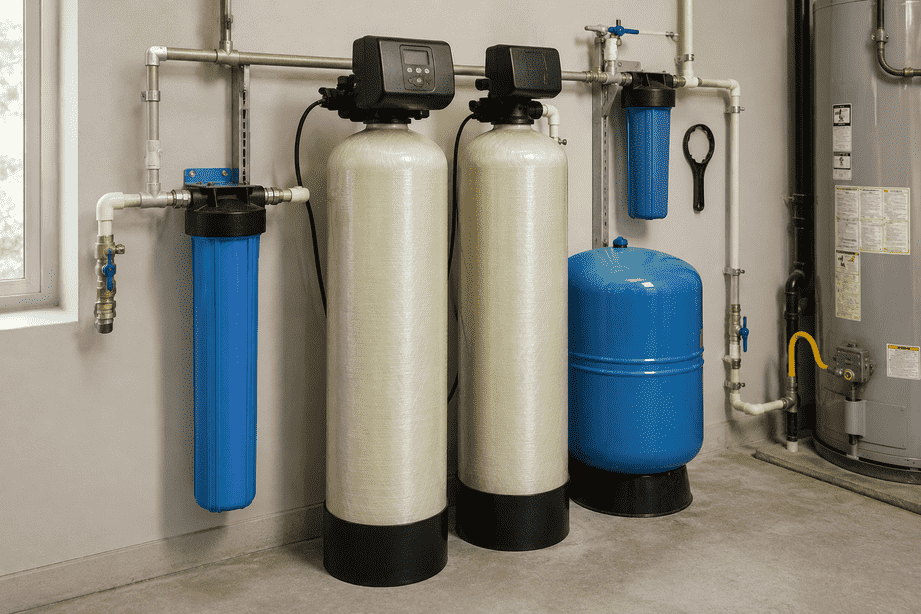
Whole-house filtration systems treat water as it enters the home. This means every faucet, shower, and appliance benefits from improved water quality.
These systems are commonly used to reduce:
- Sediment
- Chlorine
- Odors
- Certain chemicals
Reverse Osmosis Systems
Reverse osmosis systems provide highly purified drinking water through a specialized filtration process.
They are frequently used to reduce:
- PFAS
- Lead
- Nitrates
- Dissolved solids
- Certain heavy metals

Water Softeners
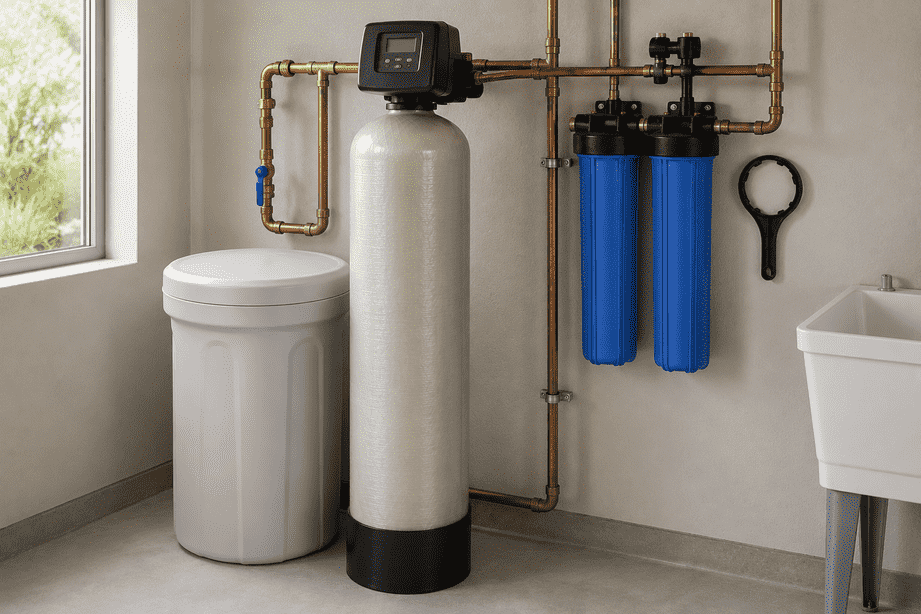
Water softeners are specifically designed to address hard water issues by reducing calcium and magnesium levels.
Benefits include:
- Reduced scale buildup
- Improved appliance efficiency
- Softer skin and hair
- Cleaner dishes and fixtures
Specialty Filtration Systems
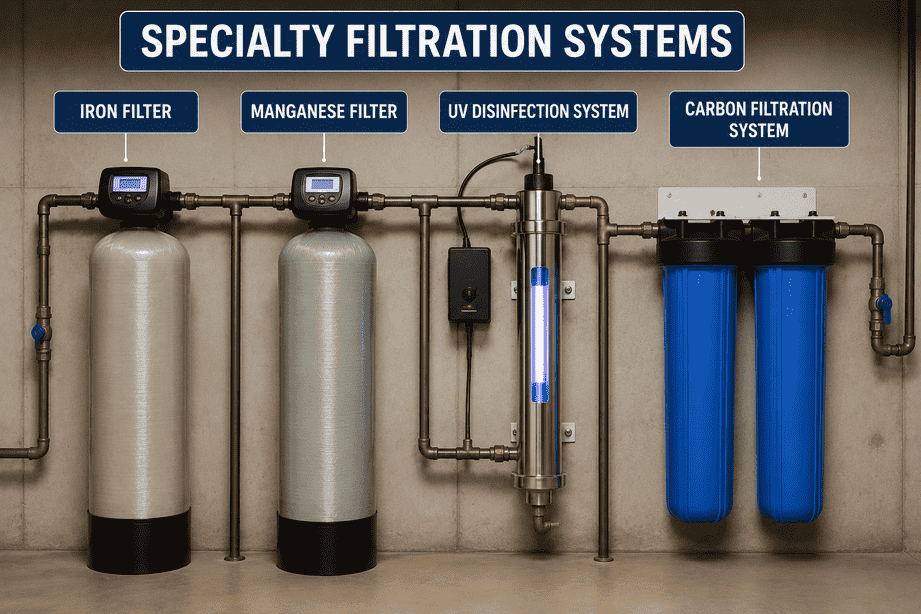
Certain contaminants require targeted treatment solutions. Iron filters, manganese filters, UV disinfection systems, and advanced carbon filtration systems may be recommended depending on water test results.
Why Water Testing Should Come Before Filtration
One of the biggest mistakes homeowners make is purchasing filtration equipment before understanding what is actually in their tap water.
Without testing, it is impossible to know:
- Which contaminants are present
- Whether filtration is necessary
- What type of system is appropriate
- Which treatment technology will be most effective
A professional water quality assessment removes the guesswork and helps ensure your investment addresses the actual issues affecting your home.
Improve Your Water Quality with Piedmont HVAC, Plumbing, & Chimney
Clean tap water affects every aspect of your daily life. From the water you drink and cook with to the water flowing through your plumbing system and appliances, quality matters.
Whether you’re concerned about chlorine, sediment, hard water minerals, PFAS, iron, lead, or other contaminants, understanding what’s in your water is the first step toward finding the right solution.
At Piedmont HVAC, Plumbing, & Chimney, we provide professional water testing, water filtration system installation, water softener services, and customized water treatment solutions designed to improve water quality throughout your home.
If you’ve been wondering what’s really in your tap water, schedule a professional water evaluation today and get the answers you need to protect your family, plumbing system, and home.
Frequently Asked Questions
Changes in taste can be caused by seasonal water treatment adjustments, chlorine levels, sediment, aging plumbing, or changes within the municipal water supply. A water quality test can help identify the cause and determine whether filtration is recommended.
Yes. Municipal treatment removes many harmful substances, but treated water can still contain chlorine, minerals, sediment, disinfection byproducts, and trace contaminants. Water may also pick up impurities as it travels through distribution lines and household plumbing.
White spots are often caused by hard water minerals such as calcium and magnesium. Hard water can leave mineral deposits on dishes, faucets, shower doors, and appliances while reducing the effectiveness of soaps and detergents.
Yes. Hard water can create scale buildup inside water heaters, dishwashers, washing machines, and plumbing pipes. Over time, this buildup may reduce efficiency, increase energy consumption, and shorten appliance lifespan.
It depends on your goals. Faucet filters treat water at a single location, while whole-house filtration systems treat water entering the home and can help protect plumbing fixtures, water heaters, appliances, and bathing water throughout the property.
A sulfur or rotten egg odor is commonly associated with hydrogen sulfide gas, which is more common in well water systems. Water testing can identify the source and determine the most effective treatment option.
A water softener is designed to reduce hard water minerals, while a filtration system targets contaminants such as chlorine, sediment, lead, PFAS, and other impurities. Professional water testing helps determine which solution is most appropriate for your home.
Yes. Chlorine, hard water minerals, and other water quality issues may contribute to dry skin, dull hair, soap residue, and irritation for some individuals. Water treatment systems are often installed to improve overall water quality and comfort.