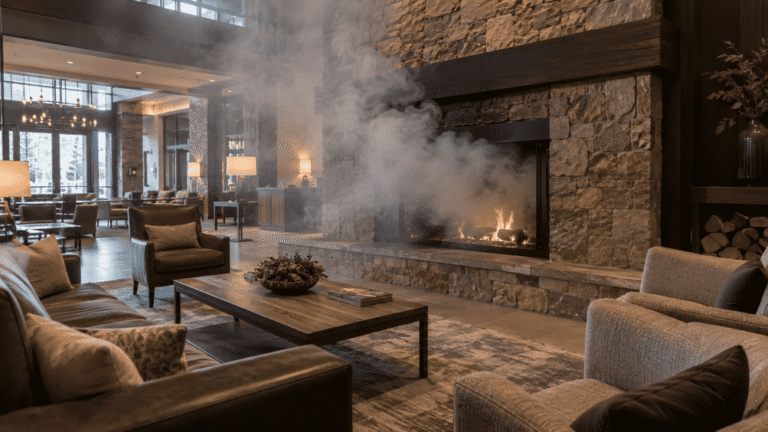
A fireplace should send smoke up the chimney, not back into your living room. When smoke spills into the house, it usually means the chimney is not creating enough upward draft to vent smoke and combustion gases properly.
The cause may be as simple as a closed damper or cold flue, or it may involve creosote buildup, a chimney blockage, negative indoor air pressure, venting problems, or inadequate chimney draft. Identifying the cause helps determine whether the fireplace can be corrected easily or should be inspected before it is used again.
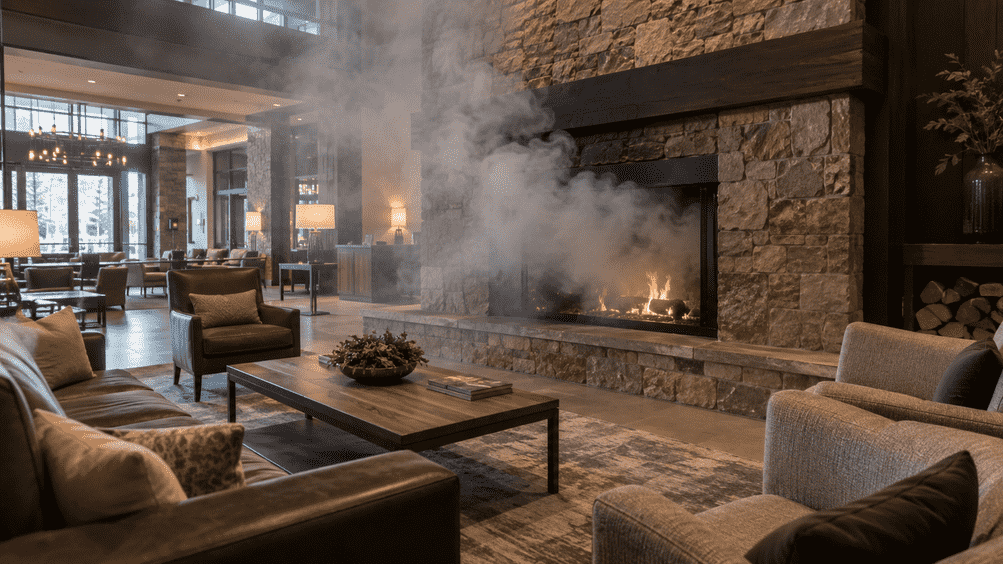
Why Is My Fireplace Smoking Into the House?
Fireplace smoke usually enters the house when the chimney does not have enough upward draft. Common causes include a closed or partially open damper, blocked flue, creosote buildup, a cold chimney, negative indoor air pressure, wet firewood, or a chimney that is too short or poorly sized.
If smoke continues after the damper is fully open and a dry, hot fire is established, stop using the fireplace and have the chimney inspected.
What Is Chimney Draft?
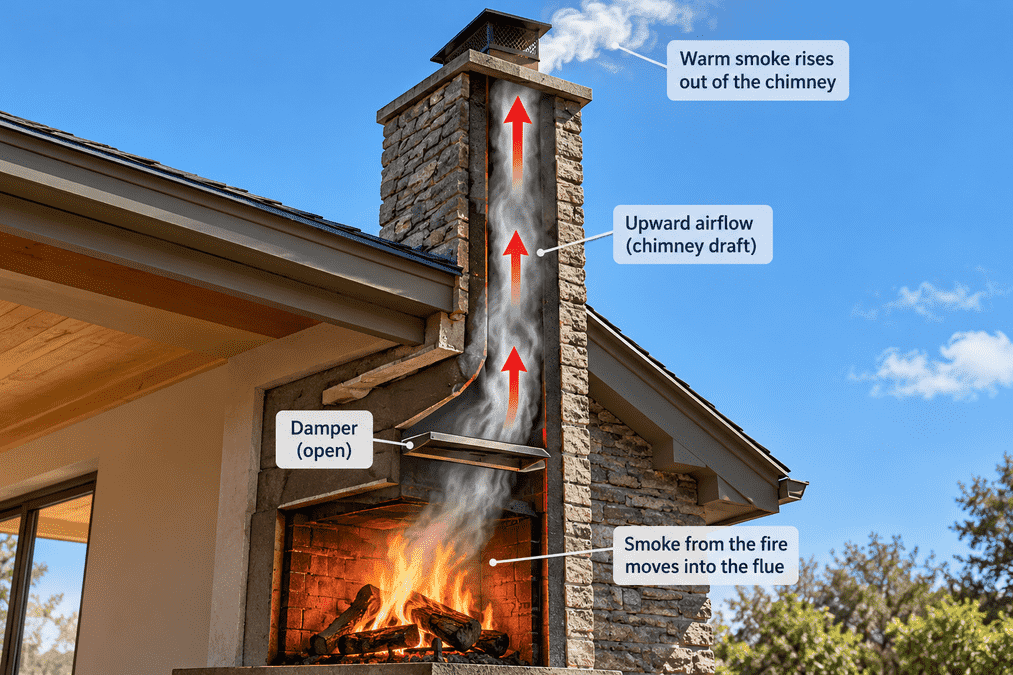
A chimney works because warm combustion gases rise through the flue, creating an upward pull known as chimney draft.
When that upward pull becomes too weak, or indoor air pressure works against it, smoke and combustion gases can spill back into the room.
Pulls smoke out of the fireplace
Supplies air to support the fire
Moves combustion gases up the flue
Helps keep smoke from entering the room
A fireplace can appear normal and still have a draft problem if the chimney is not creating enough upward airflow.
9 Reasons Your Fireplace May Be Smoking Into the House
Smoke entering the room usually points to a problem with airflow, fuel, chimney condition, or venting design.
The Damper Is Closed or Partially Open
The fireplace damper must be fully open so smoke has a clear path into the flue. Rust, damage, or a jammed damper can restrict airflow.
Check: Make sure the damper opens completely and moves freely.The Chimney or Flue Is Blocked
Bird nests, leaves, debris, loose masonry, damaged liner material, soot, or creosote can reduce the space available for exhaust gases.
Watch for: Sudden smoke problems, weak draft, or smoke odors indoors.Creosote Is Restricting Airflow
Heavy creosote deposits can narrow the flue, reduce chimney draft, and increase chimney-fire risk.
Next step: Chimney cleaning and inspection may be needed.The Flue Is Too Cold at Startup
Cold, dense air inside the chimney can temporarily resist upward airflow when the fire is first lit.
Try: Use dry kindling and a small, hot fire to warm the flue quickly.Your House Has Negative Air Pressure
Range hoods, bath fans, dryers, and airtight construction can compete with the fireplace for indoor air and weaken chimney draft.
Clue: Draft improves when exhaust fans are off or a nearby window is cracked.The Chimney Is Too Short or Poorly Positioned
Chimney height, rooflines, nearby structures, wind, and chimney placement can affect how much upward draft develops.
Note: Meeting minimum chimney height does not always guarantee good draft.Your Firewood Is Too Wet
Wet wood burns cooler, creates more smoke, warms the chimney more slowly, and can contribute to faster creosote buildup.
Good target: Seasoned firewood around 20% moisture content or less.The Flue May Be the Wrong Size
Poor sizing between the fireplace opening, flue, smoke chamber, and chimney height can prevent smoke from moving upward efficiently.
Clue: The fireplace has smoked consistently since installation or renovation.The Chimney Liner or Venting Is Damaged
Cracked flue tiles, deteriorated liners, loose masonry, or previous chimney-fire damage can interfere with safe exhaust flow.
Important: Stop using the fireplace if chimney damage is suspected.What Can You Safely Check Yourself?
- Confirm the fireplace damper is fully open.
- Use dry, properly seasoned firewood.
- Start with a small, hot fire instead of a smoldering one.
- Temporarily turn off kitchen and bathroom exhaust fans.
- Notice whether cracking a nearby window improves draft.
- Watch for soot, smoke odors, or unusual flame behavior.
- Make sure carbon monoxide alarms are working.
Do not disassemble the chimney, modify the flue, or attempt to remove major obstructions yourself.
When Should You Stop Using the Fireplace?
Smoke entering the home is not normal. Stop using the fireplace and schedule chimney service if you notice any of these warning signs.
Smoke repeatedly enters the room
The fireplace continues to backdraft after startup
You suspect a blocked chimney or flue
Heavy creosote or excessive soot is present
The damper will not open properly
The fireplace suddenly drafts differently than before
You see damaged masonry, liner, or flue components
Strong smoke odors continue after draft is established
A carbon monoxide alarm activates
A fireplace should move smoke and combustion gases safely outside. If it cannot do that consistently, it should not be used until the cause is identified.
Watch for Signs of a Chimney Fire
Creosote can ignite inside the flue. Possible signs include:
- Loud cracking or popping
- Roaring or rumbling sounds
- Dense or unusual smoke
- Strong, unusual heat
- Sparks, smoke, or flames exiting the chimney
Why Fireplace Smoke Inside the House Matters
Smoke entering the living space can mean the fireplace is not venting combustion products properly. The goal is not to tolerate occasional smoke, but to find out why the chimney is not drafting correctly.
Finding the cause is more important than masking the odor or continuing to use a fireplace that repeatedly backdrafts.
When to Call for Chimney Service
If simple checks do not correct the problem, professional chimney services can help identify the source of the smoke or draft issue.
Flue blockage or heavy creosote buildup
Weak or inconsistent chimney draft
Damper or smoke chamber problems
Damaged or deteriorated flue liner
Chimney height or flue sizing issues
Negative indoor air pressure
Chimney damage or signs of a previous chimney fire
A fireplace that has always smoked may point to a design or draft issue. If it suddenly starts smoking after years of normal use, blockage, creosote, damage, or changing air pressure may be more likely.
Fireplace Smoke Coming Into the House?
If smoke keeps entering your home, something is interfering with proper chimney draft and the fireplace should not simply be treated as “smoky.”
Start with the basics: fully open the damper, burn dry seasoned firewood, and avoid running powerful exhaust fans while the fireplace is operating. If the problem continues, the cause may involve a blocked flue, creosote buildup, negative pressure, improper flue sizing, chimney height, or damaged venting.
Piedmont HVAC, Plumbing and Chimney can help identify the source of the draft problem. Depending on what we find, the next step may include a chimney inspection , chimney sweeping , chimney capping , or ongoing care through a chimney maintenance plan .
Frequently Asked Questions
Smoke usually enters the home when the chimney does not have enough upward draft. Common causes include a closed damper, blocked flue, creosote buildup, cold chimney, negative indoor pressure, wet wood, or chimney design problems.
Poor chimney draft can result from a blocked or dirty flue, cold chimney, insufficient chimney height, improper flue sizing, negative air pressure inside the house, or other venting problems.
Yes. A blockage from nesting material, debris, creosote, damaged liner material, or another obstruction can restrict exhaust flow and force smoke back toward the fireplace opening.
A cold flue may contain dense cold air that resists the upward movement of smoke. A small, hot startup fire using dry kindling can help warm the chimney and establish draft. Persistent smoking after warm-up suggests another issue.
Opening a nearby window can allow replacement air into the house and reduce negative indoor pressure. If this consistently improves fireplace draft, your home may have a make-up air or pressure-balance problem.
Call for chimney service when smoke continues after the damper is fully open and the fire is burning properly, or if you suspect blockage, heavy creosote, damaged venting, recurring backdraft, or another chimney problem. Piedmont HVAC, Plumbing and Chimney can inspect the system and determine what is interfering with proper draft.