Gas Fireplace Won’t Light?
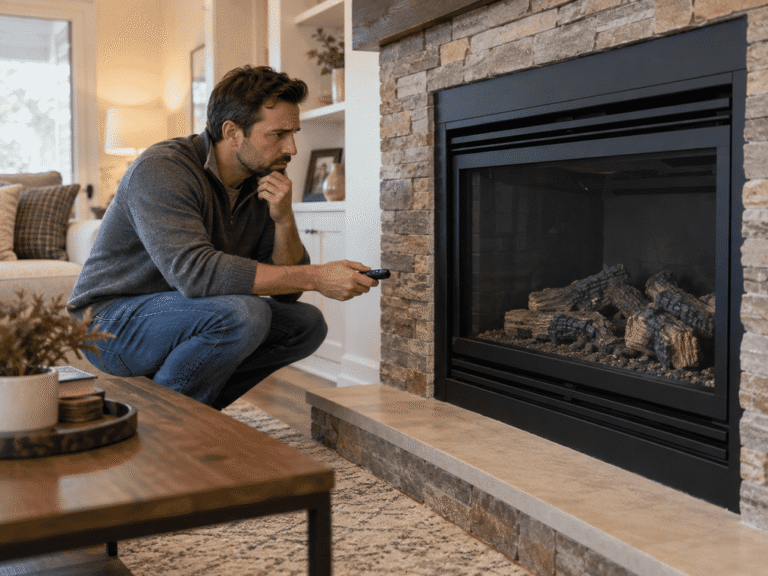
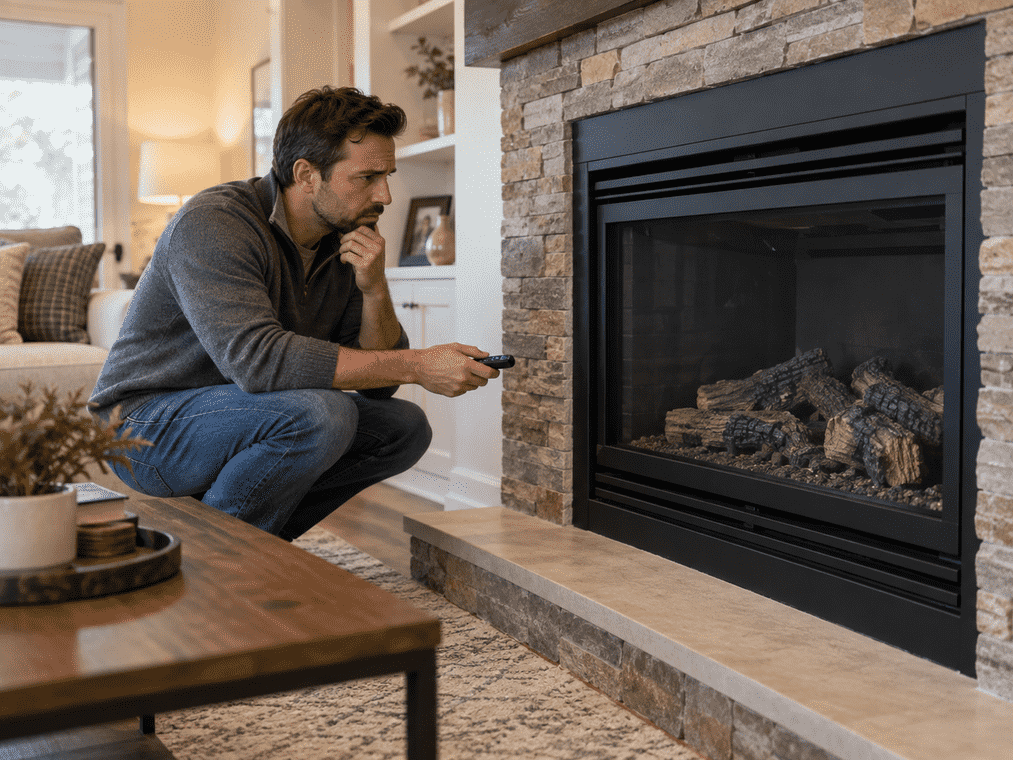
You flip the wall switch, press the remote, or turn the control knob expecting your gas fireplace to come to life, but nothing happens.
Maybe you hear clicking. Maybe the pilot lights but goes out. Maybe the pilot stays on, but the main burner never starts. Sometimes the fireplace works for a few seconds, then shuts itself down again.
When a gas fireplace won’t light, those small details matter. Different symptoms can point to problems with the pilot light, igniter, thermocouple, thermopile, burner, gas supply, remote controls, or built-in safety systems.
Some checks are simple enough for a homeowner. Others involve gas, combustion, electrical controls, or safety devices and should be handled by a trained professional.
Here is how to narrow down what may be happening and know when it is time to call for gas fireplace service.
Quick Answer
Why Won’t My Gas Fireplace Light?
A gas fireplace may not light because the pilot is out, the igniter is not sparking, the thermocouple or thermopile is not working properly, the burner or pilot assembly is dirty, the remote batteries are dead, the gas supply is interrupted, or a safety control is preventing ignition.
Start with simple checks like the remote batteries, fireplace controls, power supply, and the manufacturer’s lighting instructions.
If the pilot keeps going out, the burner will not ignite, you smell gas, or the fireplace keeps shutting down, stop troubleshooting and schedule professional service.
First, Pay Attention to What the Fireplace Is Doing
“Gas fireplace won’t light” can mean a few different things. Before assuming a part has failed, notice the exact symptom first.
Nothing Happens at All
You press the switch or remote and get no clicking, spark, pilot, or burner flame.
- Dead remote batteries
- Dead receiver batteries
- Loss of electrical power
- Wall switch problems
- Receiver or control-module issues
- Wiring problems
You Hear Clicking, But There Is No Flame
The ignition system may be trying to spark, but the pilot is not lighting.
- No gas reaching the pilot
- Dirty pilot assembly
- Ignition electrode problem
- Gas supply issue
- Weak or failed ignition module
The Pilot Lights But Will Not Stay Lit
This often points to the pilot-safety system or the pilot flame itself.
- Weak pilot flame
- Dirty pilot assembly
- Thermocouple problem
- Gas pressure issue
- Gas valve or control problem
The Pilot Stays Lit, But the Burner Does Not
The pilot may be working, but the main burner is not getting the signal or gas flow it needs.
- Weak thermopile output
- Wall switch problem
- Remote or receiver issue
- Gas valve problem
- Control wiring problem
The Burner Lights and Then Shuts Off
If the burner starts briefly and shuts down, a safety control may be stopping operation.
- Flame-sensing problems
- Gas supply problems
- Electronic control issues
- Safety lockout
- Venting or combustion problems
Thinking in terms of the symptom is usually more helpful than immediately assuming a specific component needs replacement.
1. The Pilot Light Is Out or Will Not Stay Lit
Many gas fireplaces use a pilot flame as part of the ignition system. Older or millivolt fireplaces may have a standing pilot, while newer models may use an intermittent pilot that lights only when heat is requested.
If your fireplace uses a standing pilot and the pilot is out, the main burner usually cannot ignite.
A pilot may go out because of:
- An interruption in the gas supply
- A dirty pilot opening
- A weak pilot flame
- A thermocouple problem
- A gas valve issue
- A safety shutdown
A common sign is a pilot that lights while you hold the control knob, then goes out as soon as you release it. A weak or improperly heated thermocouple may be involved, but it is not the only possible cause.
What you can check:
If your manufacturer provides a homeowner pilot-lighting procedure, follow it exactly. Do not improvise the steps or keep trying to relight a pilot that will not stay on.
If the pilot repeatedly goes out, the pilot assembly, sensor, gas supply, or safety system may need professional diagnosis.
2. The Igniter Is Not Working Properly
Newer gas fireplaces often use an electronic ignition system. When you turn the fireplace on, you may hear clicking as the ignition electrode tries to create a spark.
If the fireplace clicks but does not light, the system may be sparking without establishing a flame. If there is no clicking or spark at all, the issue may be more electrical.
Possible ignition problems include:
- Dead batteries
- Failed spark electrode
- Damaged ignition wire
- Control-module failure
- Improper grounding
- Power-supply issues
- Gas not reaching the pilot
No clicking + no flame
Often points to power, batteries, wiring, switch, receiver, or control problems.
Clicking + no flame
Often points to the pilot, ignition electrode, gas supply, or ignition sequence.
If fresh batteries and correct control settings do not solve the issue, it is usually time for gas fireplace repair instead of repeatedly cycling the ignition system.
3. The Thermocouple May Not Be Proving the Pilot Flame
A thermocouple is a safety component used on some standing-pilot gas fireplaces. When the pilot flame heats it, the thermocouple helps confirm that a flame is present.
If the pilot goes out, the thermocouple cools and the system prevents gas from continuing to flow unchecked.
A common sign is this: the pilot lights while you hold the control knob down, but goes out after you release it.
That does not always mean the thermocouple is bad
Similar symptoms can happen when another part of the pilot or gas system is not working correctly.
- The pilot flame is too weak
- The thermocouple is not positioned correctly
- The pilot assembly is dirty
- Gas pressure is incorrect
- The gas valve is malfunctioning
Because the thermocouple is part of the fireplace safety system, testing or replacing it should usually be handled by a qualified fireplace technician.
4. The Thermopile Is Weak or Failing
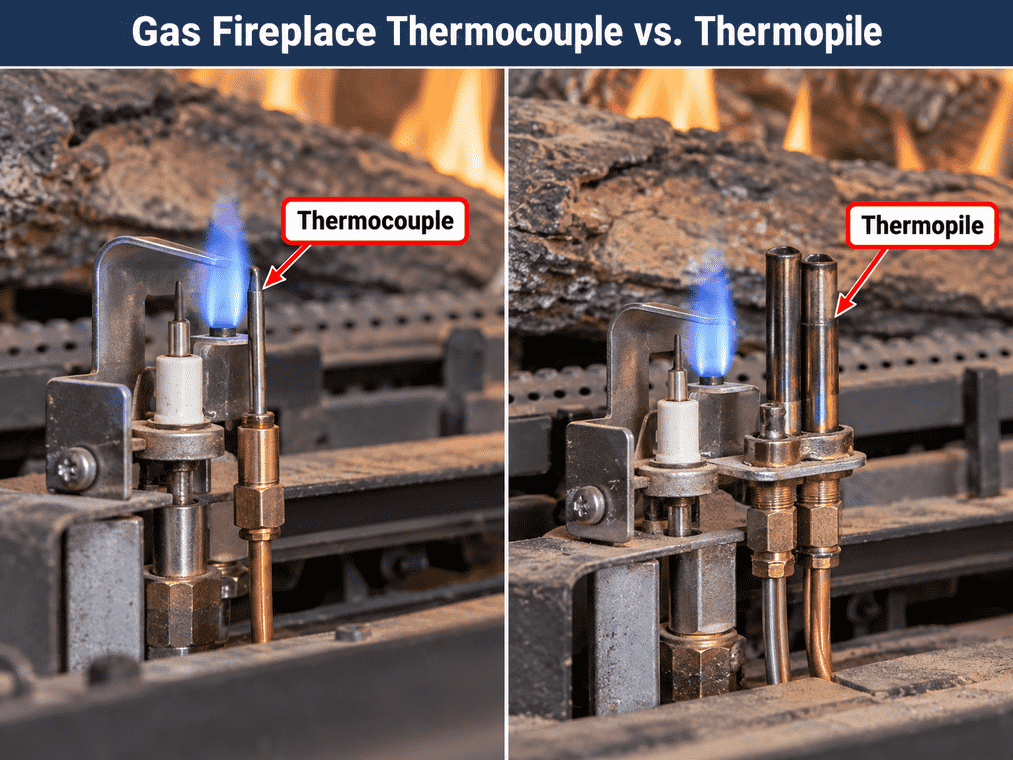
A thermopile is related to a thermocouple, but they are not the same part. A thermopile uses heat from the pilot flame to create a small electrical voltage.
On many millivolt gas fireplaces, that voltage helps operate the gas valve, wall switch, thermostat, or other controls.
A useful clue is this: the pilot stays lit, but the main burner will not turn on.
Possible causes include:
- Weak thermopile output
- Faulty wall switch
- Damaged low-voltage wiring
- Remote-control problems
- Receiver problems
- Gas valve failure
A pilot that stays lit does not automatically mean the thermopile is bad. If the main burner will not light, the full control circuit should be checked before replacing parts.
5. The Burner or Pilot Assembly Is Dirty
Dust, pet hair, debris, and other buildup can collect inside a gas fireplace, especially after months of little or no use.
The burner has small ports that distribute gas in a specific pattern. If the burner ports or pilot assembly become blocked, the fireplace may not light correctly.
Signs of a dirty burner or pilot assembly include:
- Weak burner flame
- Uneven flame pattern
- Delayed ignition
- Only part of the burner lighting
- Repeated ignition attempts
- Inconsistent fireplace operation
A dirty burner does not always mean the fireplace simply needs to be “blown out.” Gas openings, burner ports, air shutters, and orifices are designed to operate within specific conditions.
Homeowners can check for obvious debris when the fireplace is completely cool and the manufacturer allows access. However, internal burner cleaning and adjustment should usually be handled during professional gas fireplace service.
6. The Gas Supply May Be Interrupted
Sometimes the ignition system is working, but the fireplace is not getting enough fuel to light.
Possible gas-supply issues include:
- A closed manual shutoff valve
- An empty or low propane tank
- Interrupted natural-gas service
- Gas pressure problems
- Regulator problems
- Gas valve failure
- Air in a recently serviced gas line
If neither the pilot nor the main burner will ignite, the gas supply is one possibility that should be checked carefully.
What homeowners can check:
If your owner’s manual clearly identifies an accessible shutoff valve and shows the correct operating position, you can confirm it has not been turned off by accident.
Propane users can also check whether the tank still has fuel.
Do not test gas pressure, disassemble a regulator, open gas fittings, adjust the gas valve, or modify supply-line parts. Those are professional service tasks.
7. The Remote, Wall Switch, or Receiver Is the Problem
Not every gas fireplace problem starts at the burner. Sometimes the issue is with the control system that tells the fireplace to turn on.
Gas fireplaces may use:
- Handheld remotes
- Wall switches
- Thermostats
- Battery-powered receivers
- Electronic control modules
If the pilot is working but the fireplace does not respond when you press the remote or switch, start with the easiest checks first.
Check these first:
- Remote batteries
- Receiver batteries
- Receiver mode
- Wall-switch position
- Fireplace power supply
- Model-specific reset instructions
If fresh batteries and correct settings do not restore operation, the receiver, switch, wiring, or control module may need professional testing.
Helpful Difference
Gas Fireplace Thermocouple vs. Thermopile: What Is the Difference?
These terms are often mixed up online, but they do different jobs in a gas fireplace.
Thermocouple
A thermocouple is mainly a flame-proving safety device on some standing-pilot systems.
If the pilot flame does not heat it properly, the gas safety system may shut the fireplace down.
Thermopile
A thermopile creates a larger millivolt electrical output from the heat of the pilot flame.
That energy can help operate the main gas valve, wall switch, receiver, and control circuit.
A simple way to remember it:
- Pilot will not stay lit: a thermocouple or pilot-safety issue may be involved.
- Pilot stays lit, but burner will not turn on: the thermopile, control circuit, wall switch, receiver, wiring, or gas valve may be involved.
Not every gas fireplace uses these exact parts, especially newer electronic-ignition systems.
Ignition Type
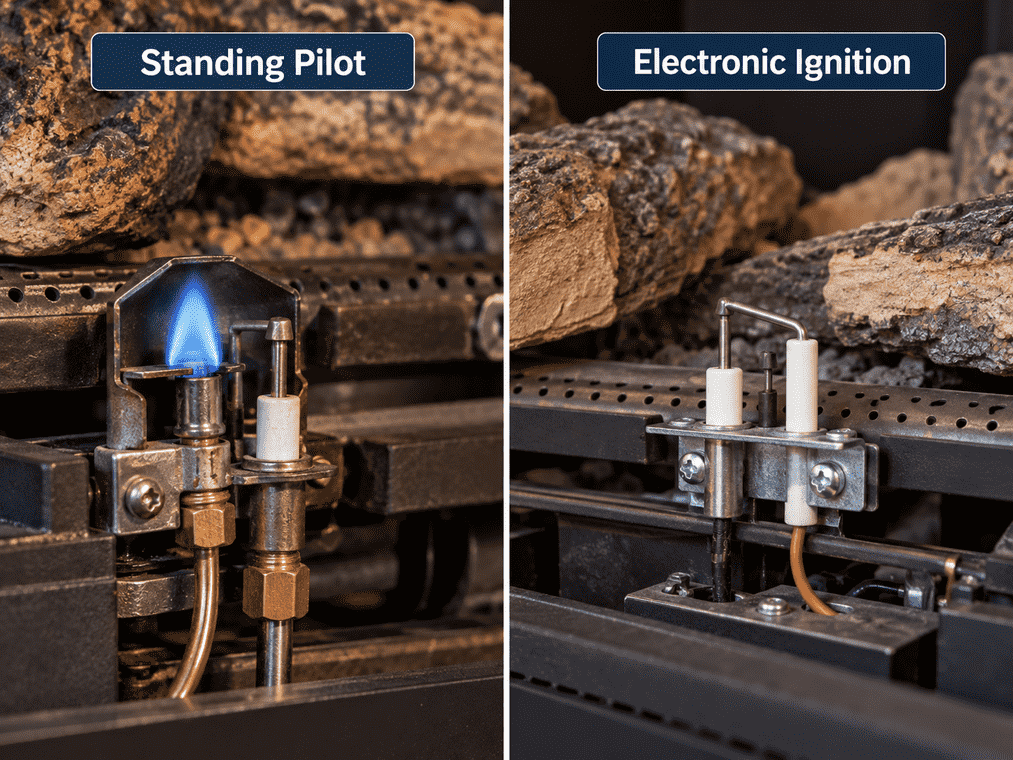
Standing Pilot vs. Electronic Ignition
Before troubleshooting, it helps to know what kind of gas fireplace you have. Different ignition systems use different parts, so the same advice may not apply to every unit.
Standing-Pilot or Millivolt Fireplace
This type may use a pilot flame that stays lit and helps power the fireplace controls.
- Standing pilot
- Thermocouple
- Thermopile
- Millivolt gas valve
- Wall switch
Some millivolt systems can operate without normal household electricity because the pilot-heated thermopile creates the small electrical signal the controls need.
Electronic-Ignition Fireplace
Newer gas fireplaces may use electronic controls that light the pilot or burner only when heat is requested.
- Electronic control module
- Spark electrode
- Intermittent pilot
- Flame sensor
- Electronic gas valve
- Remote or receiver
- Battery backup
Always identify the appliance and ignition system before assuming a part has failed.
Stop Troubleshooting If You Smell Gas
This is the most important safety rule. If you smell natural gas or propane around the fireplace, stop troubleshooting immediately.
If you smell gas:
- Do not attempt to light the fireplace
- Do not keep pressing the igniter
- Do not operate electrical switches near the suspected leak
- Leave the area
- Follow your gas provider’s emergency instructions
A gas odor is not a “keep troubleshooting and see what happens” situation.
The fireplace should remain off until the source has been identified and the appliance is safe to operate.
Watch for Signs of Combustion or Venting Problems
A gas fireplace involves combustion, so problems are not limited to whether the burner lights. Stop using the appliance and schedule service if something seems unsafe or noticeably different.
Call for service if you notice:
- Excessive black soot
- A sudden change in flame behavior
- Delayed ignition
- Flames lifting away from the burner
- Repeated burner shutdown
- Strong unusual odors
- Signs of overheating
- A carbon monoxide alarm
Do not assume every yellow or orange flame means there is a carbon monoxide problem. Many gas fireplaces are designed for a visible flame, and normal flame color can vary by model, fuel type, burner design, and log placement.
What matters most is whether the flame pattern has changed from normal operation, or whether you notice soot, delayed ignition, repeated shutdowns, odors, or other abnormal behavior.
Important Safety Reminder
Never Bypass a Fireplace Safety Device
Gas fireplaces may use several safety controls designed to protect your home, the appliance, and the people inside.
These safety controls may include:
- Thermocouples
- Thermopiles
- Flame sensors
- Gas valves
- Oxygen-depletion sensors on applicable appliances
- Ignition lockouts
- Electronic safety controls
If one of these systems repeatedly shuts the fireplace down, bypassing the device is not the solution.
The goal is to find out why the safety system is stopping operation, not to force the fireplace to keep running.
When Should You Call for Gas Fireplace Service?
Basic troubleshooting should stop once the issue goes beyond simple controls, batteries, switches, or obvious external checks.
Call for professional gas fireplace repair or service if:
- The pilot will not stay lit
- The fireplace repeatedly fails to ignite
- The pilot stays on, but the burner will not start
- The burner lights and then shuts off
- The fireplace shows signs of delayed ignition
- You see heavy soot
- The flame pattern has changed significantly
- The gas valve or regulator may be involved
- The fireplace repeatedly enters lockout
- You suspect a thermocouple or thermopile problem
- Electrical controls or wiring need testing
- You smell gas
- You are unsure whether the fireplace is safe to operate
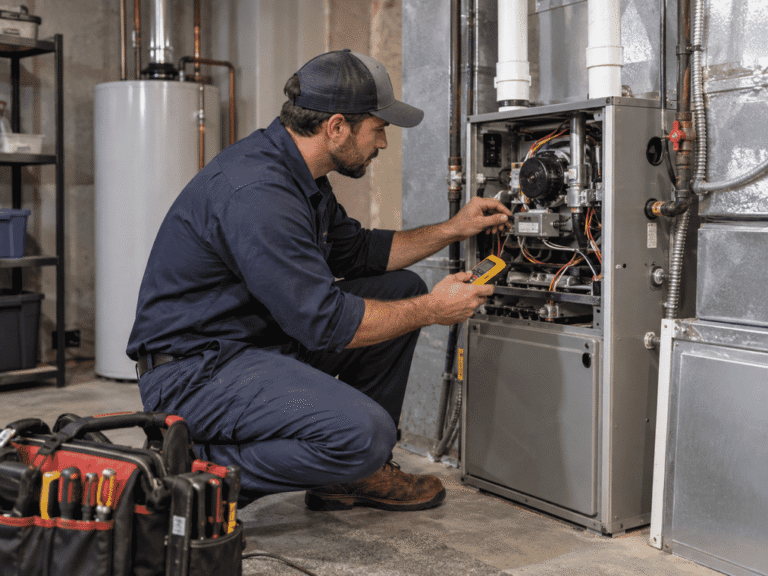
Gas fireplaces combine fuel, ignition, combustion, electrical controls, and safety devices. Once the problem moves beyond manufacturer-approved homeowner checks, proper diagnosis is safer than guessing at parts.
Gas Fireplace Won’t Light? Start With the Symptom
A gas fireplace that will not light does not always mean something serious is wrong. Start with the simple checks first, like the remote batteries, receiver setting, wall switch, power supply, and your manufacturer’s pilot-lighting instructions.
After that, pay attention to what the fireplace is doing. No spark, a pilot that will not stay lit, a pilot that works but no burner flame, or a burner that shuts off quickly can all point to different issues.
If the problem involves gas parts, ignition components, wiring, combustion, or safety controls, it is time to stop troubleshooting and call a professional.
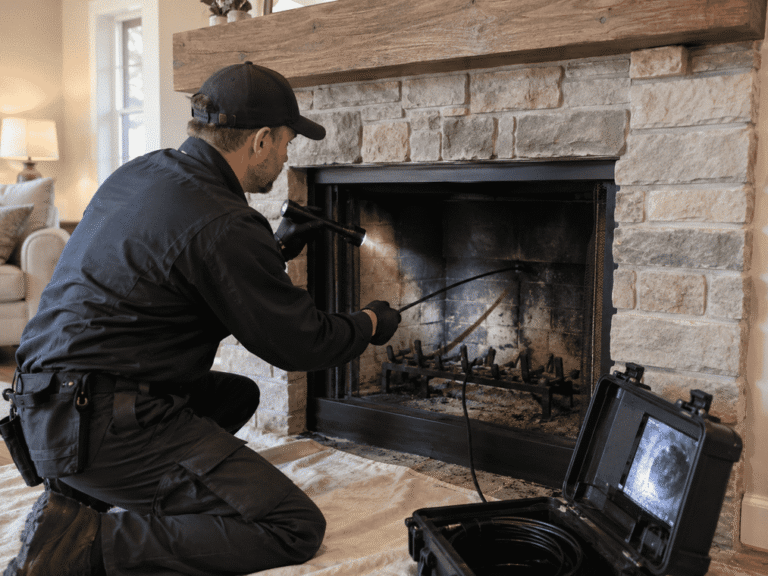
Piedmont HVAC, Plumbing and Chimney can help diagnose gas fireplace ignition problems, pilot issues, burner problems, and other fireplace concerns. If your gas fireplace will not light or is not working normally, contact our team to schedule professional gas fireplace service.
Frequently Asked Questions
A weak pilot flame, dirty pilot assembly, thermocouple problem, gas pressure issue, or gas-control problem can cause the pilot to go out. If the pilot repeatedly fails after following the correct lighting procedure, schedule professional service.
Clicking usually means the ignition system is attempting to create a spark. If no flame appears, possible causes include an ignition-electrode problem, dirty pilot assembly, gas-supply problem, or control issue.
If the pilot remains lit but the burner does not start, possible causes include a weak thermopile, wall-switch failure, remote or receiver problem, wiring issue, gas valve problem, or another control fault.
A thermopile uses heat from the pilot flame to generate a small electrical voltage. In many millivolt gas fireplaces, that voltage helps operate the main gas valve and fireplace controls.
Yes. Some gas fireplaces use batteries in the handheld remote, receiver, ignition module, or backup power system. Weak or dead batteries can prevent the fireplace from receiving or completing the command to ignite.
Dust or debris around burner ports or the pilot assembly can contribute to weak, delayed, or uneven ignition. Gas burner and pilot components should be cleaned carefully according to the appliance design, and internal service is best handled professionally.