Air conditioners rarely fail without warning.
Most of the time, your system gives you small clues before it completely stops working. The problem is that those clues are easy to ignore, especially when the AC is still running.
Maybe the house takes longer to cool. Maybe the air feels a little warmer than usual. Maybe you hear a noise you have not heard before, or you notice water around the indoor unit. At first, it may not seem urgent.
But small AC problems can turn into major breakdowns fast, especially during hot weather when the system is already working hard.
Your air conditioner is made up of many parts that all depend on each other. Airflow, refrigerant, electrical components, coils, fans, motors, and drainage all have to work together. When one part struggles, the rest of the system often has to work harder to make up for it.
That is why catching early warning signs matters.
If you know what to watch for, you can often schedule a repair before your AC quits on the hottest day of the week. This guide explains the most common signs your air conditioner may need repair, what they usually mean, and when it is time to call Piedmont HVAC, Plumbing and Chimney for help.
1. Your AC Is Blowing Warm Air
Warm air from the vents is one of the most obvious signs that something is wrong.
Your air conditioner should pull heat from inside your home and send cooled air back through the vents. If the air feels warm, lukewarm, or barely cooler than room temperature, the system is not doing its job.
This can happen for several reasons.
Sometimes it is something simple, like the thermostat being set incorrectly or the air filter being badly clogged. Other times, it may be caused by a refrigerant problem, dirty coils, electrical trouble, or a failing compressor.
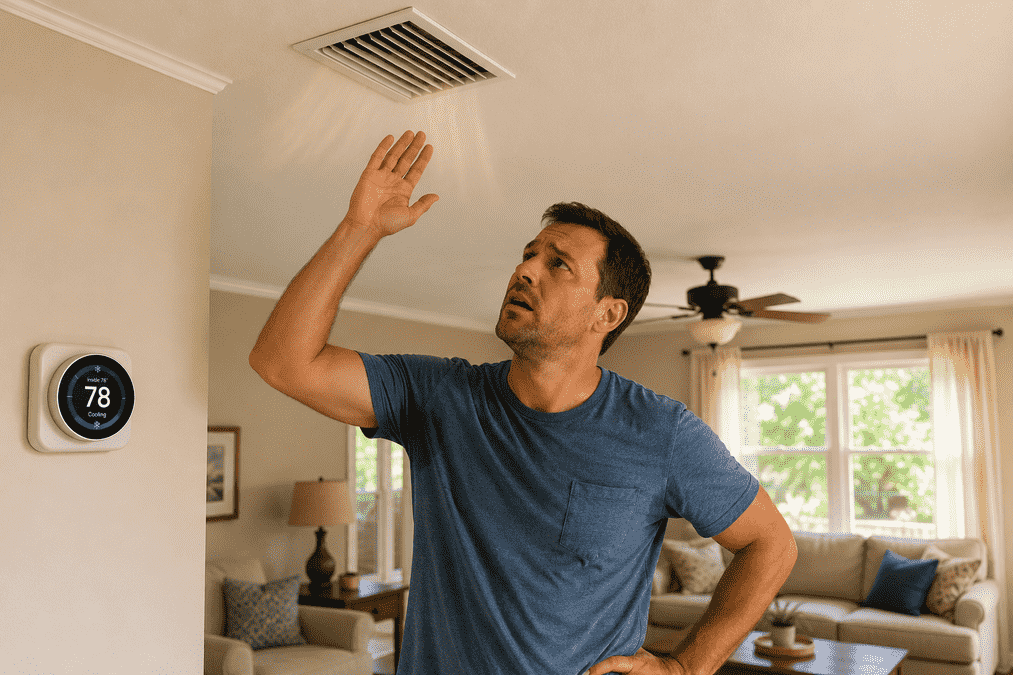
Before calling for repair, check the basics:
- Make sure the thermostat is set to cool.
- Set the temperature lower than the current room temperature.
- Check the air filter.
- Make sure vents are open and not blocked.
- Look at the outdoor unit to see if it is running.
If the AC still blows warm air after those checks, it is time to have it inspected.
Do not let the system run for hours if it is not cooling. That can waste energy and put extra strain on the equipment. An AC that is running nonstop without cooling is usually trying to compensate for a problem it cannot fix on its own.
2. The Airflow Feels Weak
Weak airflow is easy to overlook because the AC may still be producing cold air.
The problem is that cold air does not help much if it cannot move through your home properly. You may notice one room feels comfortable while another stays warm. You may also feel barely any air coming from certain vents.
Weak airflow can be caused by:
- A clogged air filter
- Blocked return vents
- Closed or obstructed supply vents
- Dirty indoor coil
- Blower motor problems
- Leaky ductwork
- Damaged ductwork
- A frozen evaporator coil
The air filter is always the first thing to check. A dirty filter restricts airflow and forces the system to work harder. If the filter is packed with dust, pet hair, or debris, replacing it may improve airflow quickly.
But if a clean filter does not fix the issue, there may be a deeper problem.
Airflow is not just about comfort. Your AC needs proper airflow to operate safely and efficiently. Without enough air moving across the indoor coil, the coil can get too cold and freeze. Once that happens, your system may stop cooling altogether.
Weak airflow is one of those problems that may seem minor at first, but it can create bigger issues if ignored.
3. You Hear Strange Noises
You know what your AC normally sounds like.
A steady hum from the outdoor unit is normal. Air moving through the vents is normal. A soft click when the system turns on or off can be normal.
What is not normal is a new, loud, sharp, or unusual noise.
Pay attention to sounds like:
- Grinding
- Screeching
- Banging
- Buzzing
- Rattling
- Clanking
- Hissing
- Loud clicking
- High-pitched squealing
Different noises can mean different things.
A rattling sound may mean something is loose. A buzzing sound may point to an electrical problem. Screeching can mean a belt, bearing, or motor issue. Banging or clanking can happen when a part is loose or damaged. Hissing may be related to air escaping or a refrigerant issue.
The important thing is change.
If your AC suddenly sounds different than it used to, do not ignore it. Small mechanical issues can turn into major damage if the system keeps running.
For example, a loose part can hit other components. A motor problem can get worse until the motor fails. An electrical issue can prevent the system from starting.
If the noise is loud, harsh, or paired with a burning smell, shut the system off and schedule service.
4. Your AC Smells Bad When It Runs
Your AC should not make your home smell unpleasant.
A little dusty smell can happen the first time you turn the system on after it has been sitting for a while. But strong, repeated, or unusual odors are a warning sign.
Different smells can point to different problems.
- A musty smell may mean moisture is sitting somewhere inside the system. This can happen when the drain line is clogged, the drain pan is dirty, the indoor coil is holding moisture, or there is buildup inside the system or ductwork.
- A burning smell is more serious. It may point to an electrical issue, overheating part, motor problem, or wiring concern. If you notice a burning odor, turn the system off and call for service.
- A chemical-like smell may also need attention, especially if it is new or strong.
Your AC removes humidity from the air as it cools your home. That moisture has to drain away properly. If the drainage system clogs or water sits too long, odors can develop.
Bad smells are more than annoying. They can be a sign of moisture, electrical trouble, or indoor air quality concerns.
If the smell keeps coming back, have the system checked.
5. The AC Turns On and Off Too Often
Your air conditioner should run in steady cooling cycles.
It should turn on, run long enough to cool the home, then shut off once it reaches the thermostat setting. If it turns on and off every few minutes, that is called short cycling.
Short cycling is not normal.
It can be caused by:
- A dirty air filter
- Low refrigerant
- Frozen coil
- Thermostat problems
- Electrical issues
- Dirty coils
- A failing capacitor
- An oversized AC system
- Safety switch problems
Short cycling is hard on the system because starting up takes more effort than continuing to run. When the AC starts and stops repeatedly, it puts extra strain on the compressor, motors, and electrical components.
You may also notice your home feels humid. That happens because the AC is not running long enough to remove moisture from the air properly.
The opposite problem can also be a warning sign.
If your AC runs constantly and still cannot cool the house, something may be wrong. It may be struggling with poor airflow, dirty coils, low refrigerant, duct leaks, or aging equipment.
Whether your system is cycling too often or running nonstop, it is worth having it checked before it breaks down completely.
6. You See Water Leaking Around the Unit
Your AC naturally removes moisture from the air.
That moisture should collect and drain away through the condensate drain system. You should not see water pooling around the indoor unit, dripping through the ceiling, or soaking nearby flooring.
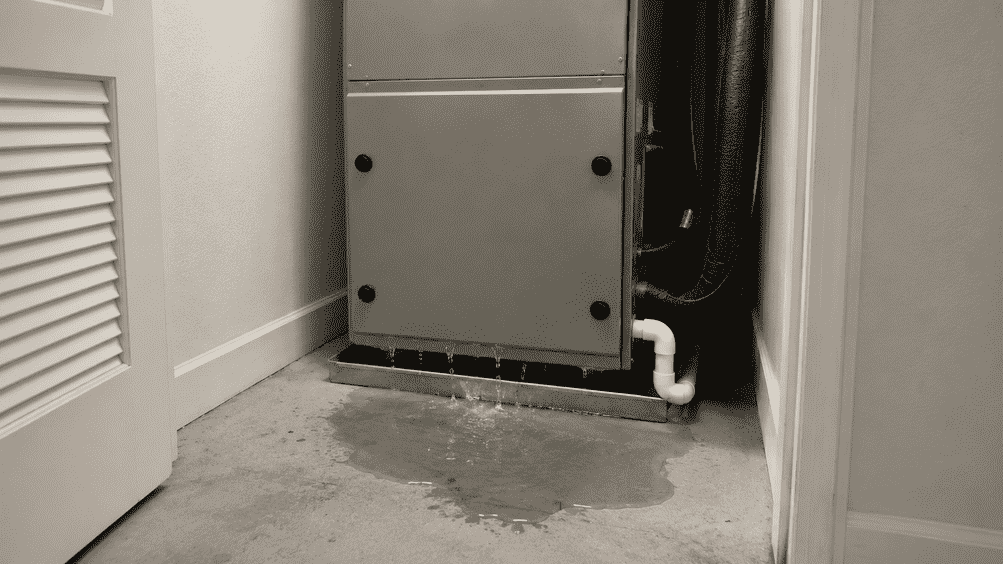
Water leaks can be caused by:
- A clogged condensate drain line
- A cracked drain pan
- A frozen coil melting
- A disconnected drain line
- A dirty indoor coil
- A failed condensate pump
- Improper drainage slope
A small leak can cause bigger problems than people expect. Water can damage floors, walls, ceilings, insulation, and nearby materials. If moisture sits too long, it can also create conditions for mold or mildew growth.
If your AC is leaking, do not keep ignoring it just because the system still cools.
Also watch for ice.
Ice on the refrigerant line, indoor coil, or outdoor unit during cooling season usually means something is wrong. Many homeowners assume ice means the AC is cooling too well, but it actually means the system is struggling.
Ice can form because of poor airflow, low refrigerant, a dirty coil, or blower problems.
If you see ice, turn the system off and let it thaw. Then schedule service to find out why it froze in the first place. Simply melting the ice does not fix the cause.
7. Your Energy Bill Suddenly Goes Up
A higher energy bill does not always mean your AC is broken.
If the weather is hotter than usual or you are setting the thermostat lower, your system will naturally run more. But if your bill jumps and your habits have not changed, the AC may be working harder than it should.
This can happen when:
- The air filter is dirty
- Coils are dirty
- Airflow is restricted
- Refrigerant is low
- Ductwork is leaking
- A motor is weakening
- The thermostat is not reading correctly
- The system is short cycling
- The equipment is aging
A struggling AC can still cool your home for a while. It just takes more energy to do it.
That is why rising energy bills are easy to miss as an early warning sign. The system may not look broken. It may not sound terrible. It may still get the house close to the temperature you want.
But behind the scenes, it may be running longer, starting more often, or straining to keep up.
If your cooling costs rise suddenly without a clear reason, schedule an inspection. Finding the issue early may prevent a more expensive repair later.
What You Can Check Before Calling for Repair
There are a few simple things homeowners can check safely before scheduling service.
Start with these:
- Check the thermostat settings.
- Replace or clean the air filter.
- Make sure supply vents are open.
- Make sure return vents are not blocked.
- Check the circuit breaker.
- Clear leaves, grass, and debris around the outdoor unit.
- Look for water around the indoor unit.
- Listen for unusual sounds.
- Notice whether the problem happens all the time or only sometimes.
These small details can help narrow down the issue.
However, do not open electrical panels, handle refrigerant lines, bypass safety switches, or take apart major AC components. Air conditioners involve high voltage, refrigerant, motors, capacitors, and moving parts.
If the simple checks do not solve the issue, it is safer to call a professional.
When AC Repair Should Not Wait
Some AC problems are more urgent than others.
You should schedule service quickly if you notice:
- Warm air during hot weather
- No airflow
- Ice on the system
- Burning odors
- Loud grinding or banging
- Water leaking near walls, ceilings, or flooring
- Breaker repeatedly tripping
- AC turning on and off rapidly
- Outdoor unit not running
- Sudden major cooling loss
Waiting too long can make the repair more expensive.
A clogged drain can cause water damage. A weak capacitor can leave the system unable to start. A frozen coil can stop cooling completely. A refrigerant issue can strain the compressor. A loose part can damage nearby components.
The earlier you catch the problem, the better chance you have of avoiding a full breakdown.
How to Help Your AC Last Longer
You cannot prevent every AC repair, but you can reduce the chances of sudden failure.
The best habit is simple: keep up with maintenance.
Homeowners can help by:
- Replacing the air filter regularly
- Keeping vents open and clear
- Keeping the outdoor unit free of leaves and debris
- Not ignoring new sounds or smells
- Watching for water leaks
- Scheduling routine AC maintenance
- Calling early when cooling performance changes
Your AC works hardest during hot weather. If it already has a small problem going into the hottest part of the season, that problem is more likely to show up when the system is under pressure.
A little attention early can save a lot of stress later.
How Piedmont HVAC, Plumbing and Chimney Can Help
When your AC starts acting strange, you should not have to guess what is wrong.
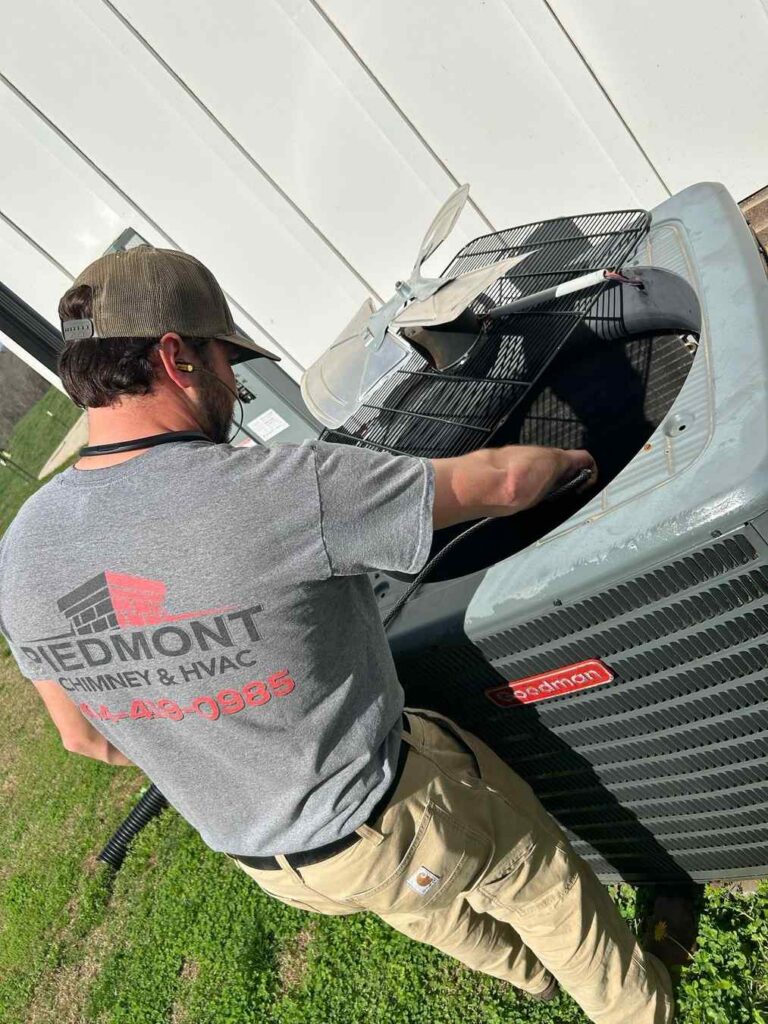
Piedmont HVAC, Plumbing and Chimney can inspect your system, explain the issue clearly, and recommend the repair that makes the most sense for your home.
Our team can help with:
- AC not cooling
- Warm air from vents
- Weak airflow
- Frozen coils
- Water leaks
- Strange noises
- Musty smells
- Short cycling
- Thermostat problems
- Blower motor issues
- Electrical problems
- Capacitor problems
- Preventive AC maintenance
We focus on clear answers and practical solutions. If your system can be repaired, we will explain what needs to be fixed. If the equipment is older and repair costs no longer make sense, we will help you understand your options.
Final Thoughts
Your AC does not have to completely stop working before you call for help.
Warm air, weak airflow, loud noises, strange smells, short cycling, water leaks, ice, and rising energy bills are all signs that something may be wrong. Some problems are simple. Others can become expensive if ignored.
The safest move is to pay attention early.
If your air conditioner is showing any of these warning signs, contact Piedmont HVAC, Plumbing and Chimney today. Our team can inspect the system, find the cause, and help keep your home cool before a small issue turns into a full breakdown.
Frequently Asked Questions
Your AC may need repair if it blows warm air, has weak airflow, makes strange noises, smells unusual, turns on and off too often, leaks water, freezes up, or causes your energy bill to rise without a clear reason. These problems can point to airflow restrictions, electrical issues, refrigerant problems, clogged drains, dirty coils, thermostat trouble, or worn parts.
An AC problem is urgent if you notice burning smells, loud grinding or banging, ice on the system, water leaking near walls or ceilings, repeated breaker trips, or no cool air during hot weather. These signs can point to electrical trouble, frozen coils, drainage problems, or major system strain.
Uneven cooling can happen when vents are blocked, ductwork is leaking, the air filter is clogged, or the system is struggling with weak airflow. It can also happen if the AC is improperly sized or the thermostat is not reading the home’s temperature accurately.
Short cycling means your AC turns on and off too quickly without completing a normal cooling cycle. This can be caused by low refrigerant, a dirty filter, thermostat issues, electrical problems, or an oversized system, and it can put extra stress on the compressor.
If your AC runs constantly but the house still feels warm or humid, the system may have dirty coils, low refrigerant, restricted airflow, duct leaks, or aging components. A properly working air conditioner should cool the home and remove humidity during normal cycles.
An outdoor AC unit may not turn on because of a tripped breaker, failed capacitor, thermostat issue, wiring problem, contactor failure, or safety switch interruption. If the indoor fan runs but the outdoor unit stays off, the system should be inspected.
During heavy cooling season, many homes need an air filter change every 1 to 3 months. Homes with pets, dust, allergies, or frequent AC use may need filter changes more often to prevent airflow problems and system strain.