You turn up the thermostat, hear the furnace start, and wait for warm air. A few seconds later, air comes through the vents but it’s cold.
Now you’re wondering: Why is my furnace blowing cold air when the heat is on?
The good news is that a furnace blowing cold air doesn’t automatically mean you need a new furnace. Sometimes the cause is as simple as the thermostat being set incorrectly or a clogged air filter. Other times, the problem involves the ignition system, flame sensor, overheating, ductwork, or an internal component that requires professional furnace repair.
The key is knowing what you can safely check yourself and when it’s time to call an HVAC technician.
Quick Answer
Why Is My Furnace Blowing Cold Air?
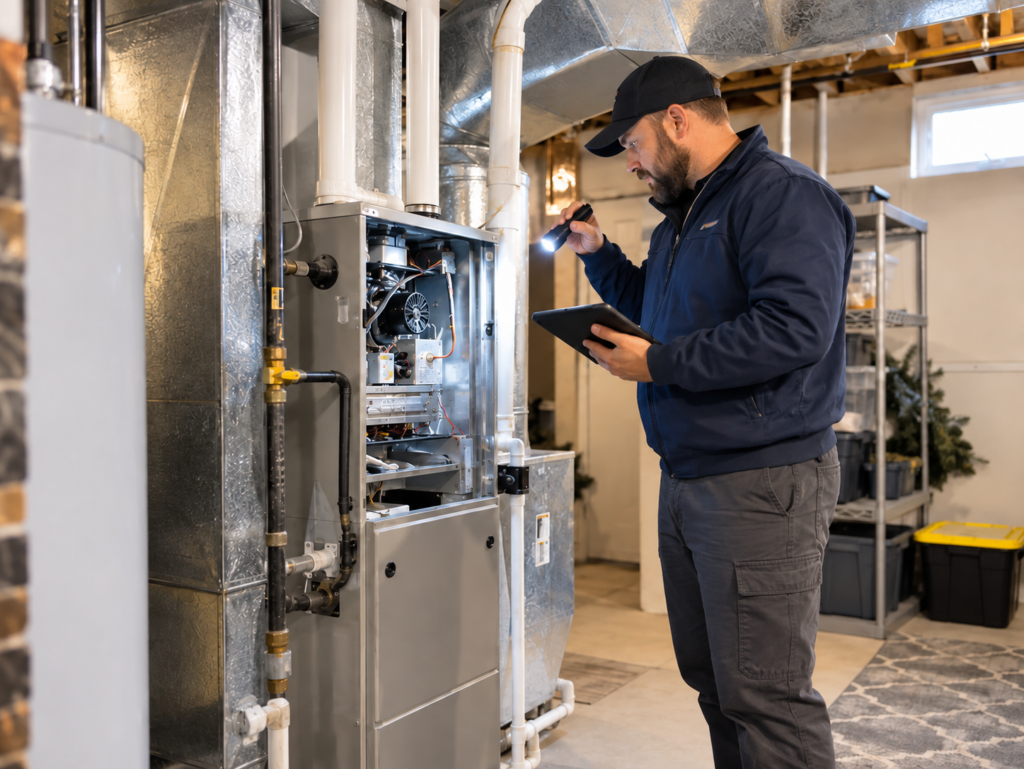
A furnace can blow cold air because the thermostat fan is set to ON instead of AUTO, the air filter is clogged, the furnace is overheating, the burners are not igniting, the flame sensor is not detecting a flame, heated air is escaping through damaged ductwork, or an internal furnace component has failed.
Homeowners can safely check thermostat settings, the furnace filter, registers, and visible ductwork. Problems involving gas, ignition, electrical components, combustion, or repeated furnace safety shutdowns should be diagnosed by a qualified HVAC technician.
First, Is a Little Cold Air Normal?
Sometimes.
When your furnace first starts, there may still be cooler air sitting inside the ductwork. The blower can push that air through your supply registers before fully heated air reaches the rooms.
You might also feel cooler air briefly near the end of a heating cycle.
What isn’t normal is a furnace that keeps blowing cold air while the thermostat is calling for heat, especially when your home never reaches the temperature you selected.
If that sounds familiar, one of these seven problems may be responsible.
1. Your Thermostat Settings Are Wrong
Before assuming the furnace is broken, check the thermostat first. Make sure it is set to HEAT and that the set temperature is higher than the current indoor temperature.
Next, check the fan setting. If the fan is set to ON, the blower may run continuously even when the burners are not producing heat. That can make room-temperature air feel cold coming from the vents.
What you can do:
- Change the fan setting from ON to AUTO
- Confirm the thermostat is set to HEAT
- Raise the set temperature above the current room temperature
- Check for programmed schedules or smart thermostat modes
- Replace thermostat batteries if needed
- Make sure the thermostat display is responding normally
If the thermostat says the heat is running but your furnace is not blowing hot air, continue checking for airflow, filter, ignition, or furnace safety issues.
2. Your Furnace Filter Is Dirty or Clogged
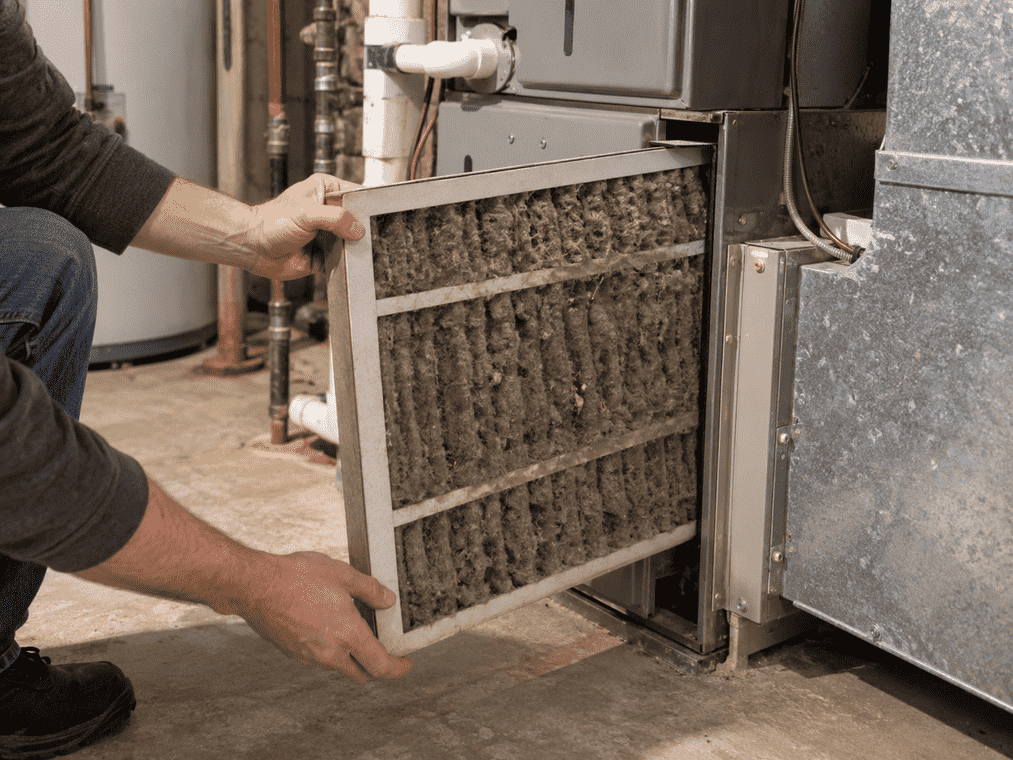
A dirty furnace filter is one of the easiest problems to check. Your furnace needs steady airflow to heat properly, and a clogged filter can restrict return air moving through the system.
When airflow is too restricted, the furnace may overheat. The high-limit switch can shut the burners off for safety, while the blower keeps running to cool the system down.
That is why your furnace may seem like it is running, but the air coming from the vents feels cool.
Check the filter first:
- Remove the furnace filter and inspect it
- Replace it if it looks dirty, clogged, or dusty
- Use the correct filter size and type for your system
- Make sure return-air grilles are not blocked
- Keep supply registers open and unobstructed
- Move furniture, rugs, boxes, or other items away from vents
If replacing the filter solves the issue, great. If the furnace keeps overheating, short cycling, or blowing cold air, schedule a professional inspection. The problem may involve the blower, airflow, high-limit control, or another mechanical issue.
3. The Pilot Light or Electronic Ignition Is Not Working
A gas furnace cannot heat your home unless the burners ignite. Older furnaces may use a standing pilot light, while many newer systems use electronic ignition, such as a hot-surface igniter or intermittent pilot.
If ignition fails, the furnace may run without producing warm air.
You may notice:
- The furnace tries to start repeatedly
- Clicking sounds or repeated ignition attempts
- The blower runs, but no warm air comes out
- The burners do not ignite
- A pilot light will not stay lit
- A diagnostic light or error code appears
- The furnace enters a safety lockout
One important note: not every gas furnace has a pilot light. Many homeowners search for pilot light problems when their furnace actually uses electronic ignition.
When to call for furnace repair:
If your gas furnace repeatedly fails to ignite, do not take apart burners, gas valves, ignition parts, or electrical controls.
Ignition problems can involve the igniter, gas valve, burner assembly, wiring, control board, or other safety components. These issues should be diagnosed by a qualified furnace repair technician.
4. Your Furnace Is Overheating
A furnace blowing cold air because it is too hot may sound odd, but it can happen. When internal temperatures get too high, the high-limit switch can shut the burners off for safety.
The blower may keep running to cool the equipment down, which can make the air from your vents feel cool.
Warm air → burners stop → blower keeps running → cool air comes through the vents
You may also notice the furnace turning on and off more often than usual. This is called short cycling.
Possible causes of overheating include:
- A clogged furnace filter
- Restricted airflow
- Blocked return-air grilles
- Static-pressure problems
- Blower motor issues
- Internal component problems
Replacing a dirty filter and clearing blocked vents are safe homeowner steps. Repeated overheating is not something to ignore.
Never bypass the high-limit switch or any furnace safety device. If your furnace keeps shutting down, schedule professional heating repair so the real cause can be diagnosed.
5. The Flame Sensor Is Dirty or Faulty
The flame sensor is a safety part that confirms the burners are actually lit. If the furnace cannot verify a stable flame, it shuts the gas valve off for safety.
A common sign is simple: the burners ignite, stay on for a few seconds, and then shut off.
The furnace may repeat this startup cycle several times before going into safety lockout. Depending on the system, the blower may keep moving air even though the burners are no longer producing heat.
Do not diagnose by symptom alone
A dirty flame sensor can cause this issue, but ignition problems, wiring faults, grounding issues, burner problems, or control board issues can look similar.
If your furnace starts and then shuts off after a few seconds, schedule a professional diagnosis. Never bypass a flame sensor to force the furnace to keep running.
6. Your Ductwork Is Leaking, Disconnected, or Damaged
Sometimes the furnace is heating correctly, but the warm air is not reaching your rooms the way it should.
Leaking, disconnected, crushed, damaged, or poorly insulated ducts can reduce airflow and let heated air escape before it reaches the vents.
Signs of a ductwork problem include:
- One room stays much colder than another
- Weak airflow from certain vents
- Uneven heating throughout the home
- A sudden drop in heating performance
- Long furnace run times
- Visible gaps or disconnected accessible ducts
Leaking ductwork does not always mean the furnace is producing cold air. The furnace may be heating normally while the duct system loses heat or airflow before it reaches the room.
Homeowners can check easy-to-see ductwork for obvious gaps or damage. Hidden leaks, airflow balancing issues, and hard-to-reach duct problems should be handled professionally.
7. Your Furnace Has a Mechanical or Electrical Failure
If the thermostat is set correctly, the filter is clean, the vents are open, and the furnace still is not producing enough heat, the issue may be inside the system.
Modern furnaces follow a specific startup sequence. If one component fails, the blower may still run even though the furnace is not actually heating.
Possible problem parts include:
- Igniter
- Blower motor
- Gas valve
- Inducer motor
- Pressure switch
- Control board
- High-limit switch
- Burner assembly
- Wiring or electrical controls
- Electric heating elements
“My furnace is running” and “my furnace is heating” are not always the same thing.
If you notice abnormal noises, error codes, ignition failures, breaker trips, repeated lockouts, or short cycling, professional furnace troubleshooting is the safer next step.
What Should You Check Before Calling for Furnace Repair?
If your furnace is blowing cold air, start with the simple checks first.
Before scheduling service, safely check:
- Confirm the thermostat is set to HEAT
- Set the temperature above the current room temperature
- Change the fan setting from ON to AUTO
- Inspect the furnace filter and replace it if dirty
- Make sure supply registers and return grilles are not blocked
- Check accessible ductwork for visible gaps or disconnections
- Look for a diagnostic code and check your owner’s manual
If the furnace still is not producing heat after these steps, repeated resets usually will not fix the real problem.
That is when professional furnace diagnosis is the safer next step.
When Should You Call a Local Furnace Repair Company?
Call for professional furnace repair when thermostat, filter, and airflow checks do not solve the problem, or when the issue involves gas, ignition, electrical parts, combustion, or furnace safety controls.
Schedule furnace service if:
- Your furnace will not ignite
- Burners ignite and shut off quickly
- The blower runs, but there is no heat
- The furnace keeps short cycling
- The high-limit switch keeps shutting the furnace down
- The furnace repeatedly enters lockout
- A breaker keeps tripping
- You hear unusual mechanical noises
- The furnace cannot maintain the thermostat temperature
- Cold air continues after changing the filter
- You keep seeing furnace error codes
If you smell gas, suspect a combustion problem, or a carbon monoxide alarm activates, stop troubleshooting and follow emergency safety procedures.
Never bypass a flame sensor, limit switch, pressure switch, or any other furnace safety device just to get the heat running again.
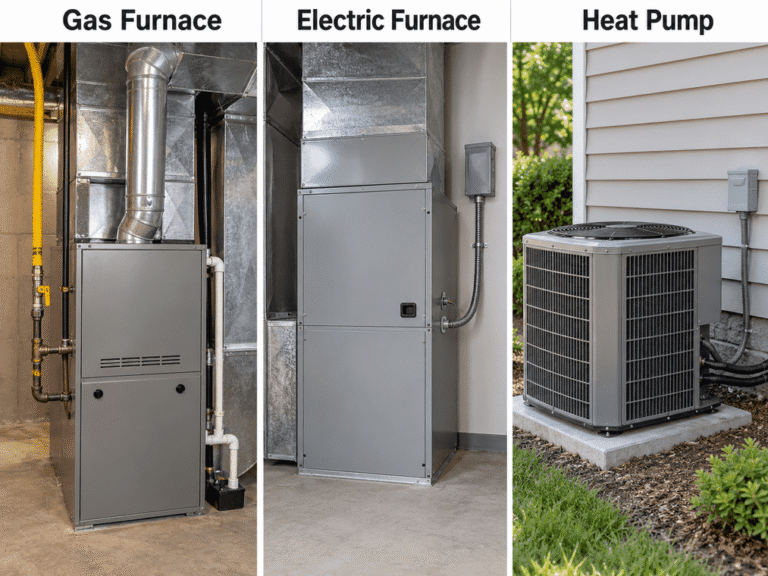
Gas Furnace vs. Electric Furnace vs. Heat Pump
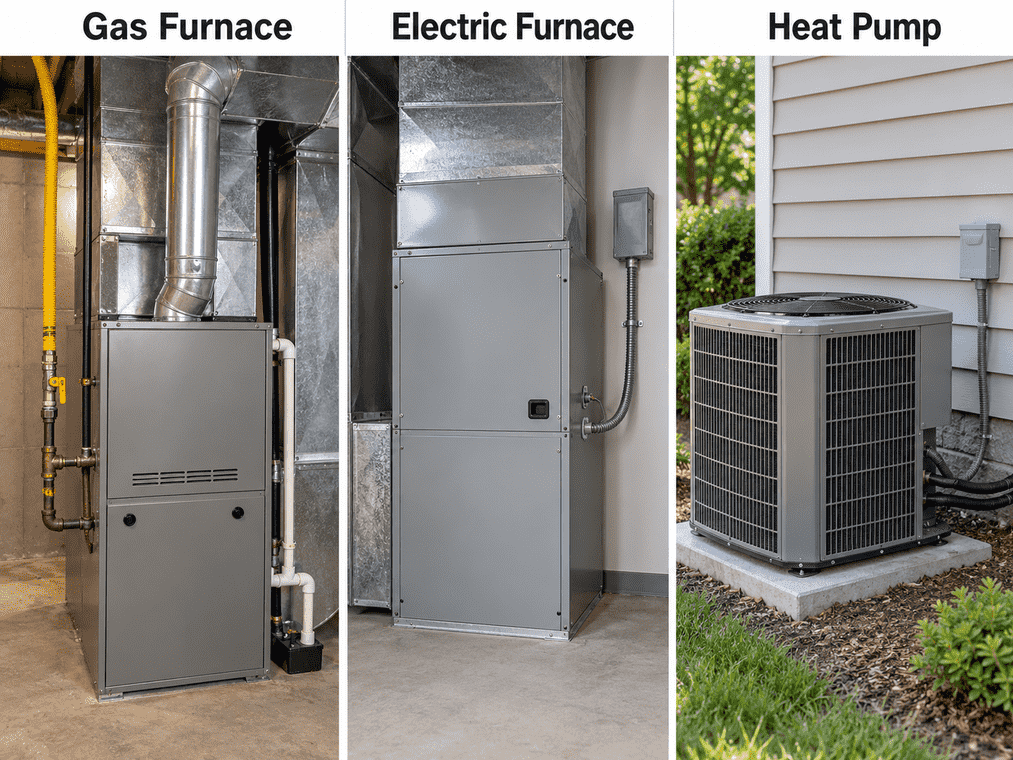
Before troubleshooting, make sure you know what type of heating system you have. Different systems heat your home in different ways, so the warning signs are not always the same.
Gas Furnace
Uses combustion to create heat. Common parts include burners, an igniter, flame sensor, gas valve, inducer motor, and safety controls.
Electric Furnace
Uses electric heating elements instead of burners or a pilot light. No-heat issues may involve elements, relays, sequencers, controls, or airflow.
Heat Pump
Moves heat rather than creating it through combustion. Supply air may feel less hot than gas-furnace air, and cooler air can happen during defrost mode.
Knowing your equipment helps you avoid troubleshooting parts your system does not have.
Furnace Blowing Cold Air? Start Simple, Then Know When to Stop
If the heat is on but cold air is coming from your vents, do not assume the worst right away. Start with the basics: check the thermostat, replace a dirty furnace filter, and make sure return grilles and supply registers are not blocked.
Those simple steps can sometimes solve the problem without a repair.
But if your furnace is running but not heating, failing to ignite, short cycling, repeatedly shutting down, or showing signs of an internal issue, it is time to stop troubleshooting and call a professional.
Furnace safety controls like the flame sensor, high-limit switch, and pressure switch are designed to protect your home and equipment. Repeated shutdowns usually mean there is an underlying problem that needs proper diagnosis.
Need Furnace Repair?
If the basic checks haven’t restored your heat, Piedmont HVAC, Plumbing and Chimney can help determine why your furnace is blowing cold air and what needs to be repaired.
Whether the problem involves ignition, airflow, a flame sensor, overheating, ductwork, or another furnace component, getting an accurate diagnosis helps avoid guessing and unnecessary parts replacement.
Contact Piedmont HVAC, Plumbing and Chimney to schedule furnace repair and get your heating system back to doing what it should, keeping your home warm.
Frequently Asked Questions
The most common possibilities include an incorrect thermostat fan setting, clogged air filter, furnace overheating, ignition failure, flame sensor trouble, ductwork problems, or an internal mechanical or electrical failure. Check the thermostat and filter first. If the problem continues, schedule furnace repair.
A brief burst of cooler air can be normal because the ductwork may contain unheated air before the furnace’s heated air reaches your vents. If the air remains cold or the house never warms up, the system should be checked.
A furnace blower can operate even when the burners or heating components aren’t producing heat. Possible causes include thermostat settings, ignition failure, overheating, a flame-sensing problem, airflow restriction, duct leakage, or an internal component failure.
Yes, indirectly. A severely clogged filter can restrict airflow and contribute to overheating. The furnace’s high-limit safety control may then shut down the burners while the blower continues operating, causing cooler air to come from the vents.
For normal heating operation, many homeowners use AUTO so the blower operates primarily during heating cycles. When the fan is set to ON, it can circulate room-temperature air between heating cycles, which may feel cold.
Look for a local HVAC company that can properly diagnose the cause rather than simply replacing parts based on symptoms. Be ready to explain whether the blower runs, whether the burners ignite, how long they stay on, any unusual noises, and any furnace error codes you’ve noticed. These details can help with troubleshooting.