If your chimney does not have the right cap, your home is exposed. Rain gets in. Animals move in. Rust starts forming. Small issues turn into expensive repairs faster than most homeowners expect.
Choosing the best chimney cap material is not just about appearance. It directly affects how long your chimney lasts, how well your fireplace performs, and how much you spend on maintenance over time.
At Piedmont HVAC, Plumbing and Chimney, we install and replace chimney caps across North Carolina. The same issues show up again and again. Cheap caps fail early. Rust stains brick. Water damage spreads inside the chimney system. Most of it could have been avoided with the right material.
This guide breaks down stainless steel, copper, and galvanized steel so you can make the right decision the first time.
Best Chimney Cap Material
The best chimney cap material for most homes is stainless steel because it offers strong durability, excellent rust resistance, and long-term value. Copper lasts the longest and adds curb appeal, while galvanized steel is the cheapest but has the shortest lifespan.
Why Chimney Cap Material Is Important
A chimney cap protects more than just the top of your flue. It protects your entire chimney system from:
- Rain and moisture intrusion
- Animal entry such as birds, squirrels, and raccoons
- Sparks and embers leaving the chimney
- Downdrafts that push smoke back into your home
In North Carolina, this matters more than most people realize. Humidity, heavy rain, and in some areas coastal air can break down weaker materials quickly. The wrong chimney cap will fail years earlier than expected.
Stainless Steel Chimney Caps
Stainless steel chimney caps are the best overall choice for durability, corrosion resistance, and long-term value.
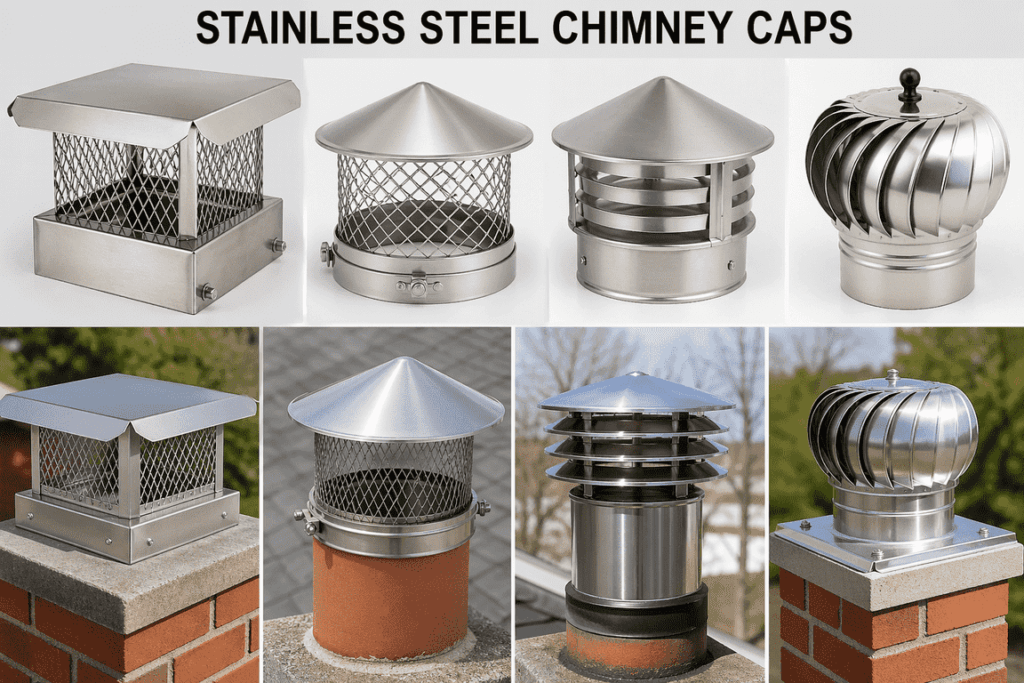
Why homeowners choose stainless steel
- Strong resistance to rust and corrosion
- Handles humidity and heavy rain well
- Performs well in both inland and coastal environments
- Requires very little maintenance
- Often backed by long-term or lifetime warranties
Most stainless steel chimney caps last 15 to 30 years or more. Higher-grade stainless options can last even longer.
Real-world insight
We regularly replace galvanized chimney caps that failed within 5 to 10 years with stainless steel upgrades. Once installed, most homeowners do not need to think about it again.
When stainless steel is the right choice
- You want long-term reliability
- You live in a humid or mixed climate
- You want the best balance of cost and performance
Copper Chimney Caps
Copper chimney caps offer the longest lifespan and the best visual appeal but come with a higher upfront cost.
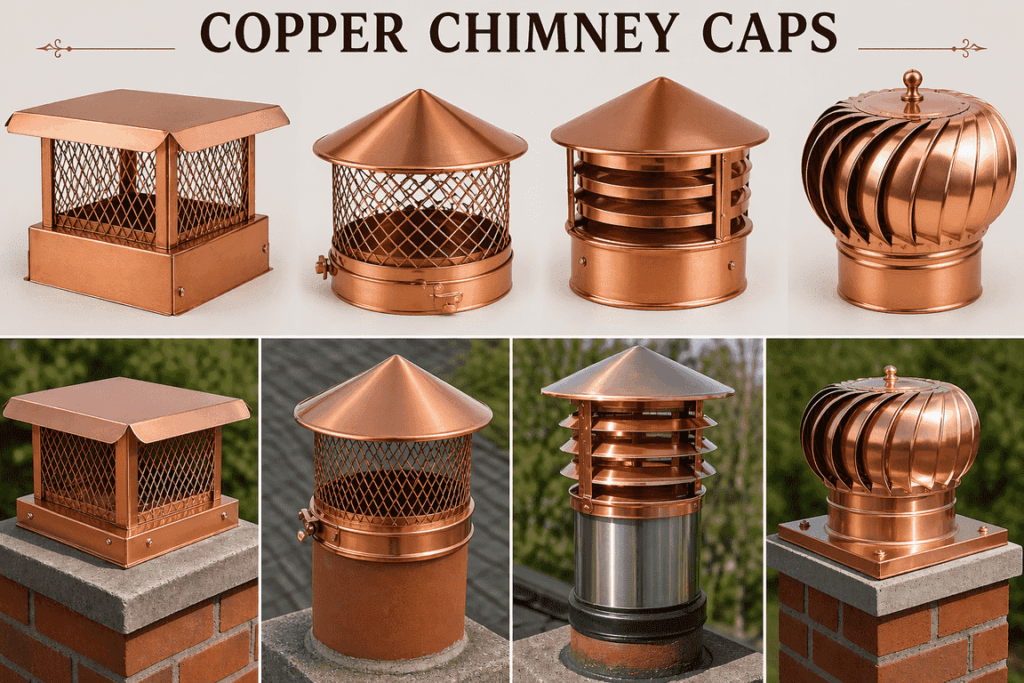
Why homeowners choose copper
- Extremely durable and resistant to corrosion
- Develops a natural patina over time
- Enhances curb appeal and home value
- Often lasts 50 years or more
Copper does not rust. Instead, it develops a protective patina that helps preserve the material.
Real-world insight
Copper caps are often installed on higher-end homes or historic properties. Many homeowners choose copper specifically for appearance, knowing it will last for decades.
Trade-offs
- Higher upfront cost
- Natural color change over time
When copper is the right choice
- You want a long-term or lifetime solution
- Appearance and curb appeal matter
- Your home has a higher-end or historic design
Galvanized Steel Chimney Caps
Galvanized chimney caps are the most affordable option but have the shortest lifespan due to rust and wear.
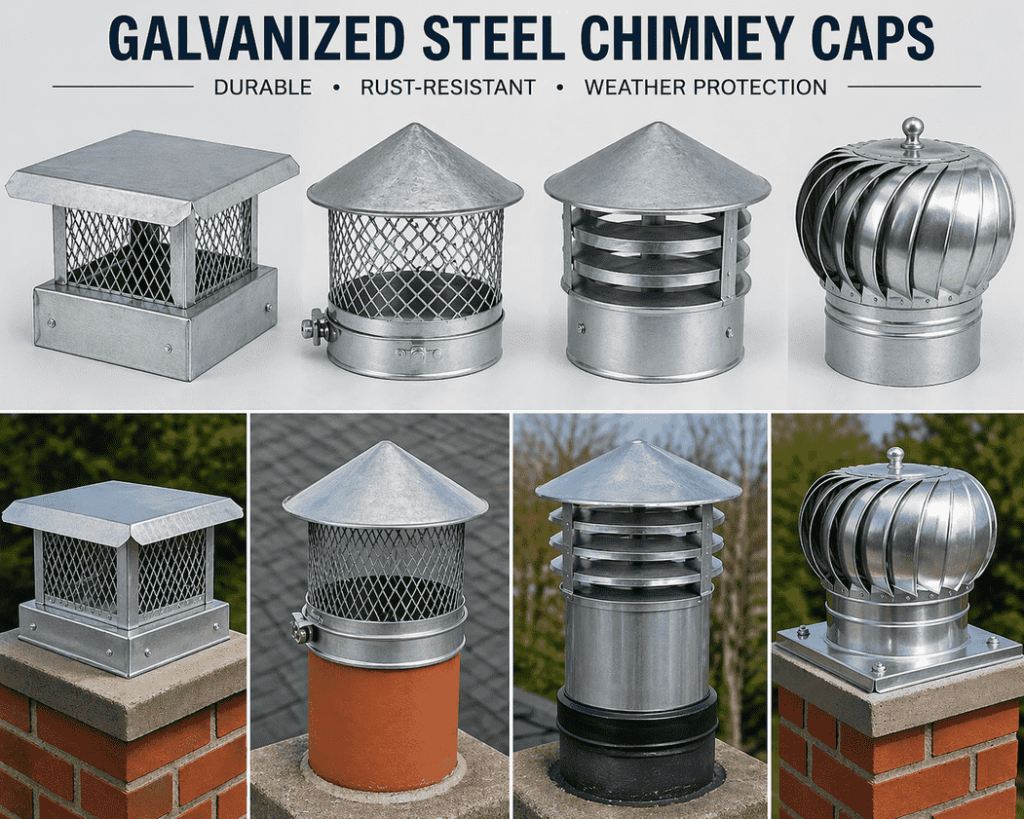
Why homeowners choose galvanized
- Lower upfront cost
- Easy to find and install
- Works as a short-term solution
Limitations
- Protective coating wears down over time
- Rust develops once coating fails
- Typical lifespan is 5 to 10 years
- Can fail faster in humid or coastal environments
Real-world insight
We often see galvanized chimney caps rusting, staining masonry, or deteriorating completely, especially in areas with heavy moisture exposure.
When galvanized makes sense
- You need a temporary solution
- Budget is the main concern
- Property is short-term or rental
Side-by-Side Comparison
Material | Lifespan | Cost Level | Rust Resistance | Best Use |
Stainless Steel | 15 to 30 plus years | Medium | High | Best overall |
Copper | 50 plus years | High | Very high | Premium homes |
Galvanized Steel | 5 to 10 years | Low | Low | Budget or temporary |
Best Chimney Cap by Scenario
If you want a direct answer, use this guide:
- Best overall choice: Stainless steel
- Best long-term investment: Copper
- Best for tight budgets: Galvanized steel
- Best for humid or coastal areas: Stainless steel
- Best for curb appeal: Copper
What Most Homeowners Get Wrong
- Choosing based on price alone: A cheaper chimney cap often leads to early failure, rust damage, and higher long-term costs. Many homeowners end up replacing a galvanized cap two or three times, which costs more than installing a stainless steel cap once.
- Ignoring climate conditions: Humidity and rain accelerate corrosion. Coastal air makes it even worse. In North Carolina, we often see lower-grade caps fail much faster than expected due to moisture exposure and temperature changes.
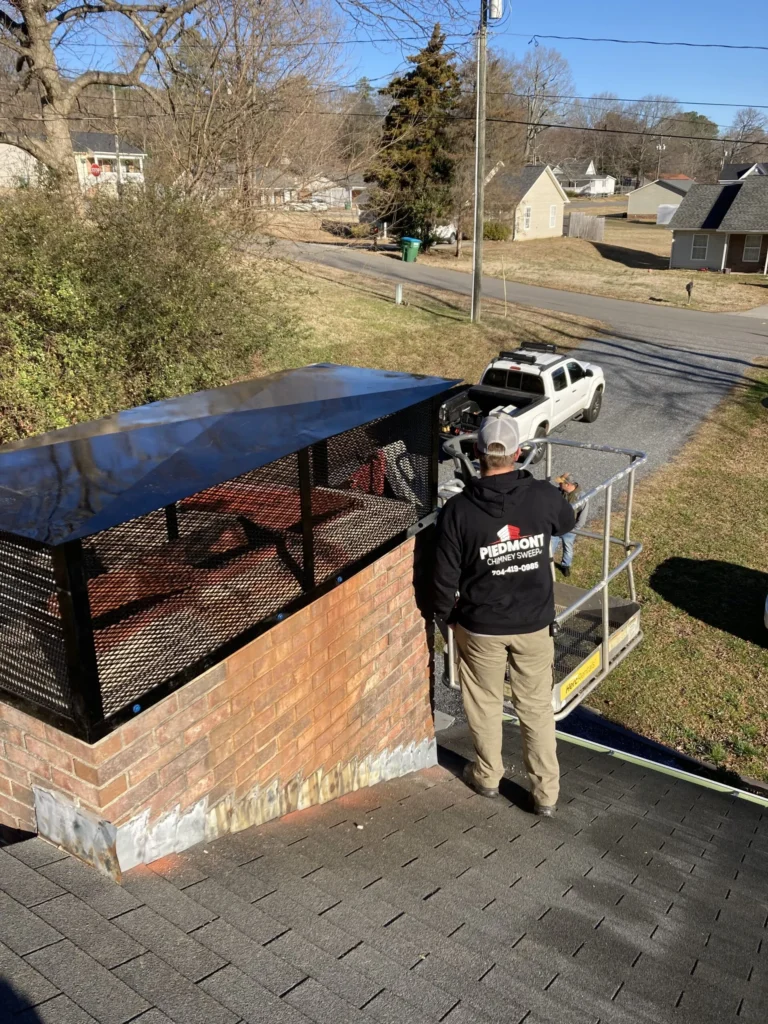
- Improper installation: Even a high-quality chimney cap will fail if it is not installed correctly or sized properly. Loose caps can blow off during storms, and gaps can allow water and animals to get inside.
- Choosing the wrong size: A chimney cap that is too small or too large will not seal properly. This leads to water leaks, poor draft, and reduced protection. Proper measurement is critical for performance.
- Overlooking the mesh screen quality: The mesh screen is what keeps animals and debris out. Cheap or thin mesh can bend, rust, or break, allowing birds and squirrels to enter the chimney.
- Ignoring maintenance and inspections: Even durable chimney caps need to be checked. Leaves, debris, and nests can clog the cap and restrict airflow. Annual inspections help catch early damage before it becomes a bigger issue.
- Not considering long-term value: Some homeowners focus only on upfront cost instead of lifespan. A cap that lasts 20 to 30 years is often far more cost-effective than replacing a cheaper one every few years.
- Skipping professional advice: Chimney systems are not one-size-fits-all. The right cap depends on flue size, chimney type, and local conditions. Getting expert input helps avoid costly mistakes.
How to Choose the Right Chimney Cap
Ask yourself:
- How long will I stay in this home
- Do I want a long-term or short-term solution
- Does appearance matter
- What weather conditions affect my home
If you want a long-term solution, choose stainless steel or copper. If you need something temporary, galvanized can work but will require replacement sooner.
Why Professional Installation Matters
A chimney cap only works when it is installed correctly.
At Piedmont HVAC, Plumbing and Chimney, we see common problems such as:
- Loose caps that blow off during storms
- Incorrect sizing that allows water entry
- Missing mesh that allows animals inside
Professional installation ensures proper fit, secure attachment, and full protection.
Final Takeaway
If you want the simplest answer, choose stainless steel. It offers the best combination of durability, cost, and performance.
Copper is the best long-term option if you want premium appearance and maximum lifespan.
Galvanized steel works for short-term needs but will need replacement sooner.
If you are unsure which chimney cap is right for your home, Piedmont HVAC, Plumbing and Chimney can help. Call today to schedule a chimney inspection and make sure your chimney is properly protected.
Frequently Asked Questions
A properly sized chimney cap with a solid top cover and overhang prevents rain from entering the flue. Stainless steel and copper caps perform best because they resist corrosion and maintain a tight seal over time, reducing chimney leaks and moisture damage.
Yes. Chimney caps with durable mesh screens block birds, squirrels, raccoons, and other animals from entering the flue. Stainless steel mesh is the most effective because it resists bending, rust, and animal damage.
A chimney cap is a metal cover installed over the flue opening, while the chimney crown is the concrete top of the chimney. The cap prevents water and debris from entering, while the crown protects the masonry from cracking and water damage.
Custom chimney caps are better for multi-flue or oversized chimneys because they provide full coverage and improved protection. They are typically made from stainless steel or copper for durability.
Common signs include rust, holes, loose or missing parts, animal entry, and water inside the fireplace. A professional inspection can confirm if replacement is needed.
Chimney caps are not always required by code, but they are strongly recommended by industry standards to prevent water damage, animal intrusion, and fire hazards.