When the air outside feels like soup and your air conditioner suddenly quits, panic hits fast. You grab your phone, start typing “emergency AC repair near me,” and brace yourself for a long, sweaty night. But before you call a 24/7 HVAC technician, there are a few simple things you can safely check on your own.
In many cases, the problem is something minor, a tripped breaker, a clogged air filter, or a thermostat set wrong. Knowing what to look for can save you time, stress, and possibly hundreds in after-hours service fees.
If your AC stops cooling suddenly, check your thermostat settings, air filter, circuit breaker, and outdoor unit before calling air conditioner repair.
Understanding Emergency AC Repair
Emergency AC repair is exactly what it sounds like: fast, 24-hour service for situations that can’t wait. That includes complete system failures during extreme heat, refrigerant leaks, burning odors, or electrical issues that pose safety risks.
But not every cooling issue qualifies as an emergency. If your home is still getting airflow but just not cooling properly, it’s worth performing a few quick checks first.
What Counts as an AC Emergency?
Knowing what’s urgent and what’s not helps you make the right call.
True emergencies include:
- The system won’t turn on at all and the indoor temperature is rising dangerously.
- You smell burning, smoke, or hear popping noises (electrical fault).
- The indoor unit is leaking water heavily or refrigerant lines are frosting over.
- The outdoor fan or compressor makes loud grinding or screeching noises.
- The breaker trips repeatedly when the system starts.
If any of these apply, shut off your AC and call an emergency HVAC repair service immediately.
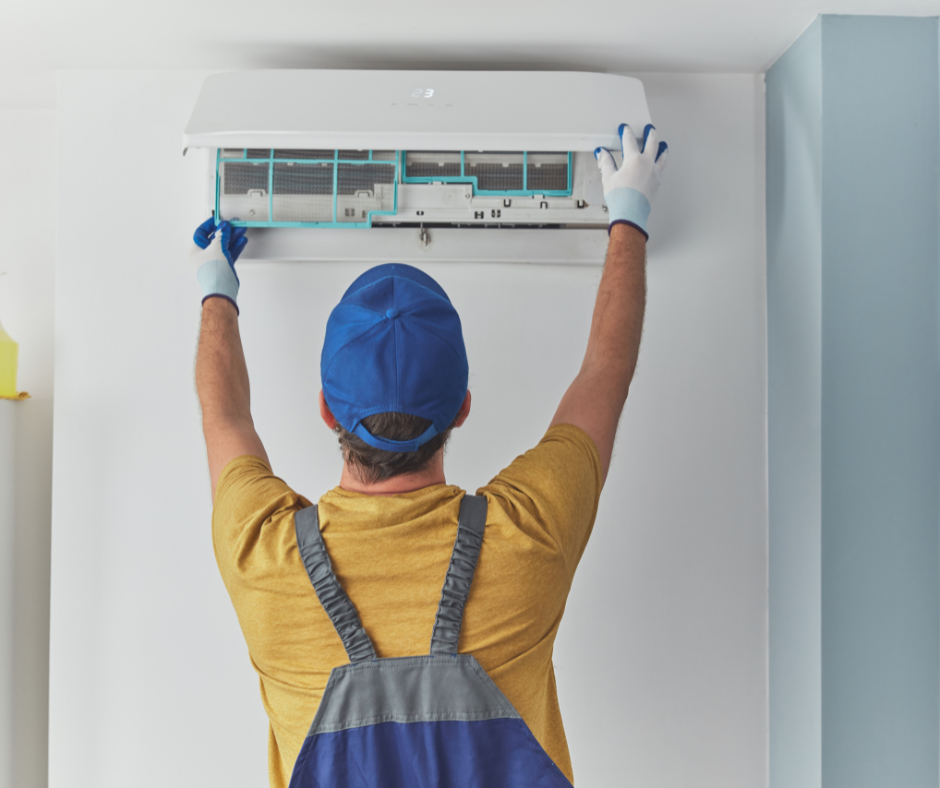
What to Check Before Calling 24/7 AC Repair
Here’s a step-by-step checklist you can safely go through before calling for emergency help.
1. Check Thermostat Settings
Make sure your thermostat is set to Cool mode and the fan to Auto, not On. When the fan is set to “On,” it blows air constantly even when the compressor isn’t cooling. This makes it seem like the AC is running but only pushing warm air.
Replace the batteries if the display is blank or flickering. Sometimes, thermostat batteries die without warning and cause the system to stop responding.
2. Inspect the Air Filter
A dirty air filter is the number one reason for poor cooling. When the filter clogs, airflow slows, the evaporator coil can freeze, and your system may shut down to prevent damage.
Turn off the system, remove the filter, and hold it up to the light. If you can’t see through it, replace it. In humid North Carolina climates, filters should be changed every 30–60 days during summer.
3. Check the Circuit Breaker
If your AC suddenly stops, a tripped breaker could be the culprit. Go to your electrical panel and look for the switch labeled “AC,” “Air Conditioner,” or “HVAC.” If it’s in the middle position, flip it fully off, then back on.
If the breaker trips again immediately, do not reset it repeatedly, this could indicate a serious electrical fault. Turn the system off and call for emergency AC service.
4. Inspect the Outdoor Unit
Head outside and look at your condenser. Make sure the fan is running and that there’s no debris blocking airflow. Grass clippings, leaves, or even pet hair can block the coil.
Turn off power, then gently rinse the fins with a garden hose. Avoid using high pressure, which can bend the fins. Maintain at least two feet of clearance around the condenser for proper ventilation.
5. Check for Ice on the Lines
If you see frost or ice on the refrigerant lines or outdoor unit, your system might be low on refrigerant or have restricted airflow. Turn off the AC immediately and set the fan to On to help thaw the coil. Once melted, replace the filter and restart. If ice forms again, call a licensed technician.
6. Inspect the Drain Line
A clogged condensate drain line can trigger a safety switch that shuts your AC down. Look for a white PVC pipe near your indoor unit and ensure it’s draining freely. If it’s clogged, use a wet/dry vacuum or flush with vinegar to clear it.
7. Listen for Strange Noises
Buzzing, humming, or clicking sounds can signal capacitor issues or electrical faults. If your outdoor fan isn’t spinning, the capacitor may have failed. This is not a DIY fix, it requires professional replacement.
8. Check Air Vents
Walk through your home and make sure all supply and return vents are open and unblocked. Furniture, rugs, and curtains can restrict airflow and make it seem like your AC isn’t cooling.
9. Evaluate Indoor Humidity
In North Carolina’s humid climate, even small issues can make your home feel sticky. If your AC is running but humidity stays high, it may be short cycling or undersized. While not an emergency, it’s worth scheduling a tune-up soon.
10. Monitor the System’s Response
After performing these checks, restart your system and wait 10–15 minutes. If cool air begins to flow, you may have solved the issue. If not, or if the system shuts down again, it’s time to contact Piedmont HVAC, Plumbing and Chimney for professional diagnosis.
When to Skip DIY and Call for 24/7 Help
Some problems are too dangerous or complex to fix yourself. Call a professional immediately if:
- You smell burning or see smoke.
- The breaker trips repeatedly.
- The system is short cycling every few minutes.
- There’s water leaking near electrical components.
- You suspect a refrigerant leak (hissing or oily residue).
Our licensed technicians at Piedmont HVAC, Plumbing and Chimney are available for emergency AC repair and same day ac repair across North Carolina.
Cost of Emergency AC Repair in North Carolina
Emergency AC repair typically costs $250–$800 depending on the issue. After-hours or weekend calls may include an additional fee. Common repairs include:
Problem | Average Cost |
Capacitor replacement | $250–$400 |
Refrigerant recharge | $300–$700 |
Compressor repair | $1,200–$2,800 |
Thermostat replacement | $150–$300 |
Blower motor repair | $600–$1,200 |
Remember, small maintenance issues like dirty filters or blocked drains can lead to bigger repairs if ignored. Routine tune-ups often cost less than one emergency visit and can prevent sudden breakdowns altogether.
Preventing Future AC Emergencies
- Change filters regularly: Every 30–60 days in summer.
- Schedule annual maintenance: Spring tune-ups catch small problems early.
- Keep outdoor units clean: Remove debris and trim vegetation.
- Seal ducts: Prevent air leaks that stress your system.
- Upgrade aging equipment: Units over 15 years old are prone to failure.
Preventive maintenance saves money and helps your AC last longer. Piedmont HVAC, Plumbing and Chimney offers comprehensive maintenance plans for homeowners across Shelby, Forest City, Gastonia, and surrounding North Carolina areas.
If your air conditioner fails suddenly, don’t sweat it. Try these quick checks, then call the trusted experts at Piedmont HVAC, Plumbing and Chimney for professional emergency AC repair in North Carolina. Our licensed team is available 24/7 to restore your comfort fast.
📞 Call now or schedule your service online to get your AC back up and running today!
Frequently Asked Questions
Check thermostat settings, filters, breakers, outdoor unit, and drain lines before calling a 24/7 HVAC technician.
Total system failure, burning smells, repeated breaker trips, or refrigerant leaks are true emergencies that require immediate attention.
Common causes include dirty filters, low refrigerant, frozen coils, or blocked condensers. Try basic troubleshooting first.
Yes. A clogged filter restricts airflow, causing the system to overheat or freeze up. Replace it regularly.
If the outdoor fan runs but air is warm, and you hear humming or clicking without cooling, the compressor may be bad.
Schedule annual maintenance, replace filters, and keep the outdoor unit clear to prevent sudden breakdowns.
No. Running the system while frozen or undercharged can damage the compressor. Turn it off and call a pro.
Piedmont HVAC, Plumbing and Chimney provides 24-hour AC repair across Shelby, Gastonia, Kings Mountain, and surrounding North Carolina areas.